
Blog
You Must Change Your Mindset To Succeed In F&I
What separates a good F&I manager from a great one? It is not always a better closing line, a longer product presentation, or another objection-handling technique. Often, it is the decision to become involved before the customer enters the finance office. In Product Prep training, automotive F&I...
F&I Training: How To Turn Preloads Into More Profit
What if your dealership could introduce F&I protection before the customer ever entered the finance office, without surprising them with another product pitch? That is the opportunity behind a well-designed preload strategy. In Product Prep training, Gerry Gould emphasizes...
How Top 1% F&I Managers Present Products the Right Way
There is a right way and a wrong way to present F&I products. The difference is not just payment structure, product knowledge, or whether the customer signs. The real difference is whether the customer feels informed and in control. For many dealerships, the problem starts before the F&I...
How Top 1% F&I Managers Conduct The Customer Interview
Most F&I managers do not lose product opportunities because customers hate protection products. They lose opportunities because the presentation feels disconnected from the person sitting in front of them. That is why the customer interview matters. In Product Prep training, Gerry Gould teaches...
F&I Training: How To Present Products And Close More Deals
Most F&I managers do not lose product opportunities because the products are weak. They lose opportunities because the process is rushed, inconsistent, or focused too much on selling before the customer understands what is being offered. That is why F&I Training: How To Present Products And...
How To Succeed In Your First 30 Days As An F&I Manager
The first 30 days as an F&I manager can feel exciting, stressful, and overwhelming all at once. One day, you are proud to step into the finance office. A few days later, you realize the job is much bigger than presenting products and signing paperwork. That is why knowing how to...
The #1 Thing Holding F&I Managers Back
Every F&I manager has heard the excuses. Business is slow. The banks are not buying. Customers are too tough. Nobody has money. Excuses do not protect PVR, improve product acceptance, strengthen compliance, or create a better customer experience. In this Product Prep training...
F&I Training: How to Reduce Chargebacks & Protect Your PVR
Why does your PVR look great on paper, but your paycheck still feels light at the end of the month? That is a painful question for any F&I manager. You sell product, deliver a strong profit per vehicle retail, and feel like the month is headed in the right direction. Then the chargebacks start...
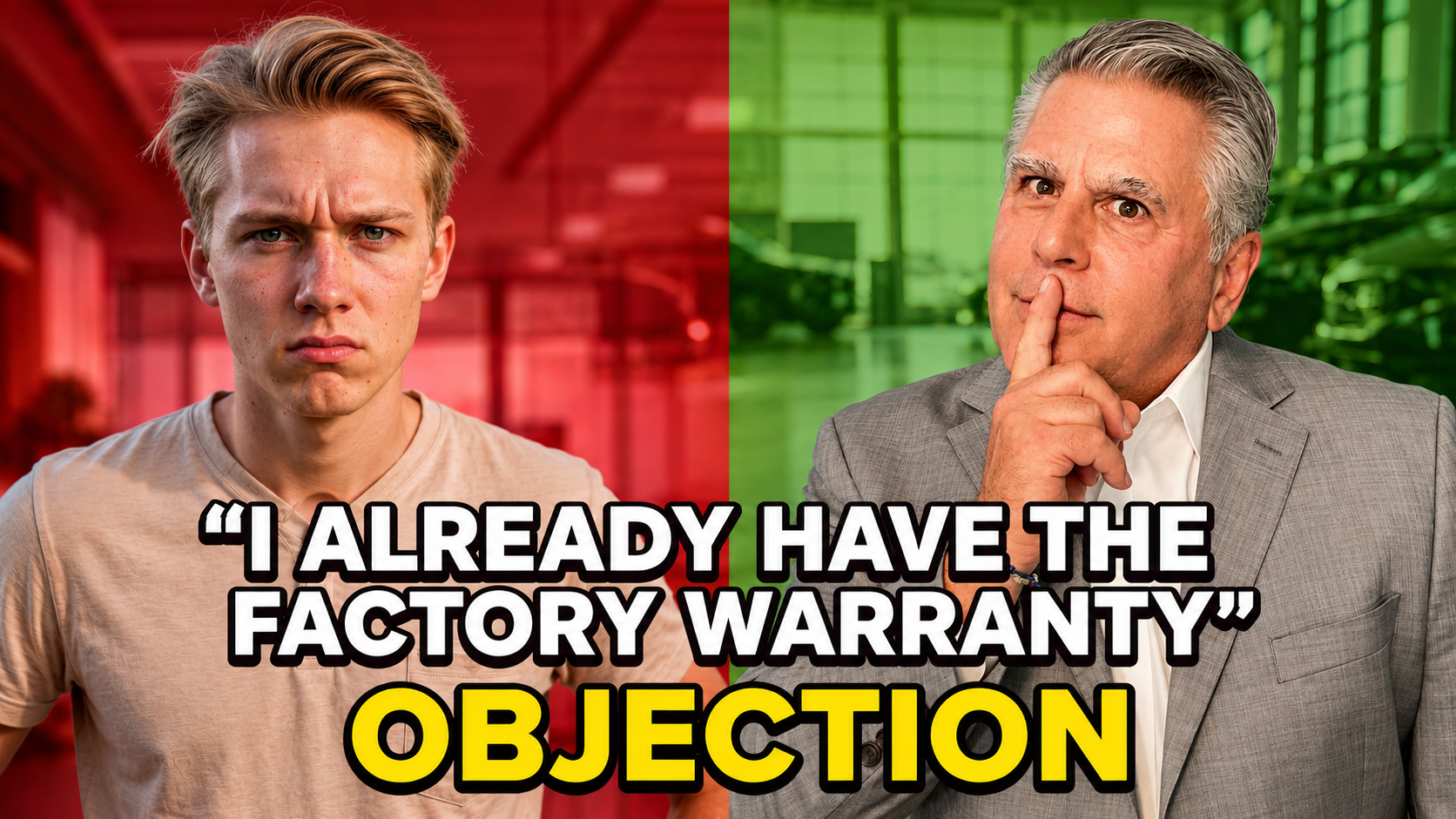
F&l Training - How To Handle "I already have the warranty" VSC Objection
What should an F&I manager say when a customer looks at the menu, sees the vehicle service contract, and says, “I already have the warranty”? The customer believes the factory warranty already gives them enough protection, so the service contract feels like an unnecessary add-on. If the...