
The #1 Thing Holding F&I Managers Back
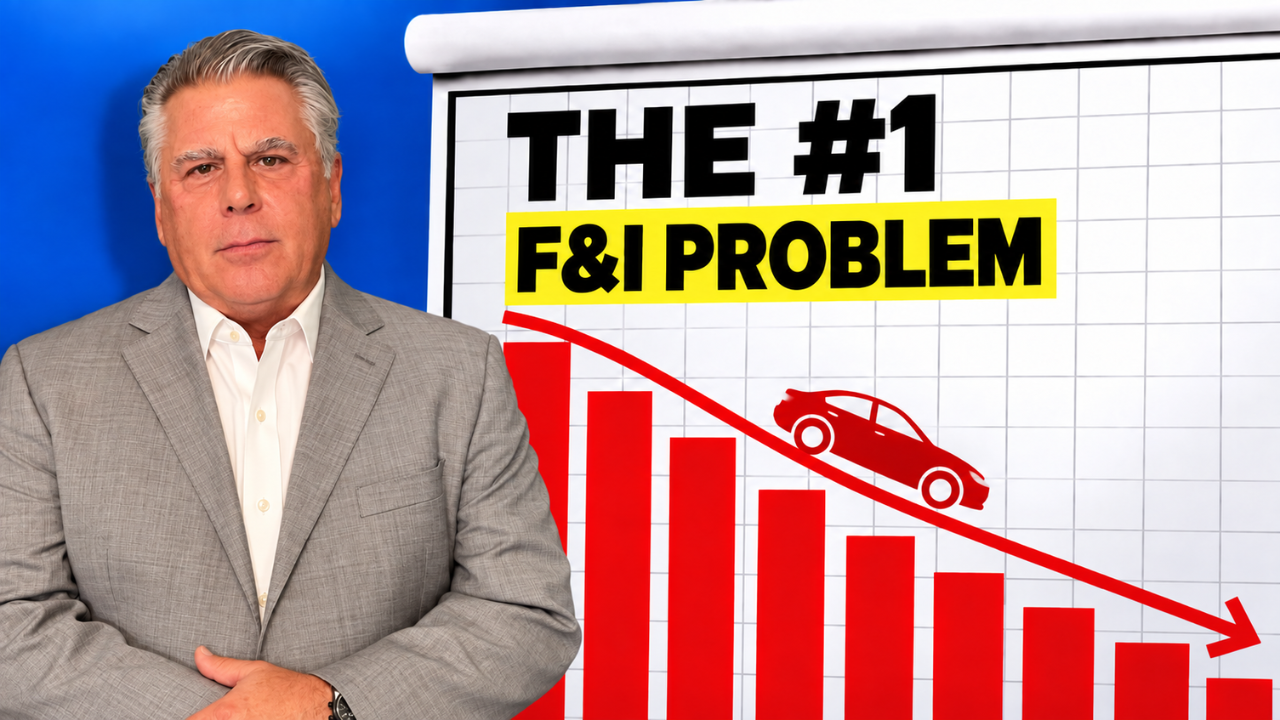
Every F&I manager has heard the excuses. Business is slow. The banks are not buying. Customers are too tough. Nobody has money. Excuses do not protect PVR, improve product acceptance, strengthen compliance, or create a better customer experience.
In this Product Prep training, Gerry Gould makes the point directly: stop letting excuses stand in the way of your strengths. The #1 thing holding F&I managers back is not always the market, the lender, the customer, or the deal structure. Many times, it is inconsistency. When an F&I manager becomes inconsistent in attitude, appearance, approach, activity, and action, results become unpredictable.
Strong F&I performance is built on repeatable habits. It comes from walking into every deal with the right mindset, explaining products with clarity, staying positive under pressure, and treating every customer opportunity with professional consistency. Product Prep helps turn daily activity into a process, and that process can help dealerships create more predictable outcomes.
Key Takeaways
- The #1 thing holding F&I managers back is allowing excuses to replace consistent action. Top performers face the same market challenges, but they do not let those challenges control their effort.
- AWC, or activity with consistency, is the foundation of stronger F&I habits. Gerry expands this idea into appearance with consistency, approach with consistency, actions with consistency, and attitude with consistency.
- F&I managers must understand how customers think before presenting products. Customers may not feel a need right away, but they often want the peace of mind protection can provide.
- Attitude is one of the most important tools in the F&I office. A positive attitude can change the tone of the conversation, create trust, and keep the manager focused.
Why Excuses Are The #1 Thing Holding F&I Managers Back
Excuses are dangerous because they sound believable. When traffic is light, it is easy to say business is slow. When approvals are difficult, it is easy to blame the banks. When customers push back, it is easy to decide they are too tough or unwilling to buy.
The challenge is that every excuse shifts focus away from what the F&I manager can control. You cannot control every credit profile, rate objection, trade situation, or customer mood. You can control your preparation, menu explanation, tone, posture, product knowledge, follow-up, and ability to ask better questions.
A manager who believes the month is already lost will usually present like the month is already lost. Their energy drops. Their explanation becomes rushed. Their confidence weakens. The customer feels it, and the dealership loses opportunities that could have been won with a stronger process.
A better approach is to replace excuses with standards. Instead of saying, “This customer will never buy,” the manager can ask, “Did I make the product relevant?” Instead of saying, “Nobody has money,” the manager can ask, “Did I explain how this protection can help reduce unexpected non-essential expenses?” That shift moves the conversation back to skill and control.
What AWC Means For F&I Managers
Gerry teaches AWC as activity with consistency, but the lesson reaches every part of the F&I role. Consistency is not about acting robotic. It is about giving every customer a professional experience, regardless of the deal, the day, or the manager’s mood.
Activity With Consistency
Activity with consistency means F&I managers do the right things every day. They prepare for the next customer. They review the deal. They understand the vehicle, terms, payment, ownership plan, and possible product fit before the customer enters the office.
This also means staying active when the day feels slow. Slow traffic should not lead to slow discipline. Use quieter moments to sharpen product knowledge, study objection handling, or practice menu transitions.
Appearance With Consistency
Appearance matters because the F&I office is a trust environment. Customers are making financial decisions, signing important documents, and reviewing products that affect long-term ownership. If the manager does not look prepared and professional, the customer may question the value of the presentation.
Appearance with consistency does not mean expensive clothing. It means looking the part every day. A clean, professional appearance supports credibility and tells the customer that the process matters.
Approach With Consistency
Approach with consistency means every customer receives the same level of effort. A cash buyer deserves a strong presentation. A low-profit deal deserves a strong presentation. A customer who seems rushed still deserves a clear explanation.
One of the biggest mistakes in F&I is prejudging. When managers decide too early that a customer will not buy, they weaken their own process. A consistent approach protects against that.
Actions With Consistency
Actions with consistency are the repeated behaviors that create predictable outcomes. These include how the manager welcomes the customer, recaps the purchase, presents the menu, explains products, handles objections, and asks for a decision.
Small actions matter. A rushed transition can create confusion. A weak explanation can make a product sound unnecessary. Product Prep training helps managers refine these daily actions so the process becomes easier to repeat and easier to coach.
Attitude With Consistency
Gerry makes attitude the most important part of consistency. A negative mental attitude can infect the presentation before the customer even asks a question. A positive mental attitude can do the opposite. It creates energy, confidence, and momentum.
Customers can feel frustration. They can also feel confidence. Enthusiasm is contagious, and so is negativity. F&I managers who want better results must protect their attitude before every deal.
The Five Mindsets Every F&I Manager Needs Before Every Deal
A consistent approach starts with the right mindset. F&I managers need to understand how customers view protection products before the conversation begins.
1. Customers Do Not Feel A Need For The Products
Most customers are not thinking about breakdowns, potholes, flat tires, total losses, dents, key replacement, or paint damage when they buy. They are thinking about the car, the payment, the excitement, and the paperwork.
That is why F&I managers cannot assume the need is obvious. The product may make perfect sense to the dealership, but the customer still needs a clear explanation. If the manager skips the value and jumps straight to price, the customer may only see an added cost.
2. Customers May Still Want The Protection
There is a difference between feeling a need and wanting protection. A customer may not expect a breakdown, but they may want coverage if one happens. They may not expect to hit a pothole, but they may want tire and wheel protection.
This is where practical product explanations matter. Instead of overselling, strong F&I managers explain what the product does, how it applies, and why it may matter during ownership. That turns the conversation from pressure into education.
3. Customers May Favor One Product Over Another
Not every customer values every product the same way. One buyer may care most about a vehicle service contract. Another may be more concerned about tire and wheel coverage because of local roads. Another may care about dents, dings, keys, or appearance protection.
The manager’s job is to discover relevance. How long will the customer keep the car? How many miles will they drive? Where will they park? Better questions lead to better product alignment.
4. Not Every Product Fits Every Deal
A consistent process does not mean forcing every product on every customer. It means giving every customer a thoughtful presentation. Some products may be more relevant than others depending on the vehicle, term, lease or finance structure, driving habits, and customer priorities.
This is also where trust is built. When a manager explains products based on relevance instead of pressure, the customer is more likely to stay engaged. The goal is to help them make a confident decision.
5. Customers Think In Essential And Non-Essential Spending
This is one of the most valuable mindsets from the training. Essential spending includes the cost of the vehicle, the payment, insurance, maintenance, and fuel. Customers already expect these expenses.
Non-essential spending is different. It includes unexpected costs like replacing tires, replacing wheels, replacing keys, repairing dings and dents, fixing rips or tears, or repainting damage. These are the expenses customers usually do not plan for.
F&I products can help protect customers from some of those unexpected costs. When managers understand this, their presentation becomes more practical. They are no longer just selling products. They are helping customers think through ownership risk.
How Consistency Improves F&I Performance
Consistency improves performance because it removes guesswork. When every manager has a repeatable process, the dealership can coach more effectively and create a better customer experience.
For F&I managers, consistency can lead to stronger menu presentations, better objection handling, improved product acceptance, fewer missed opportunities, and more predictable PVR. It can also support compliance because a consistent process makes it easier to explain options clearly and treat customers fairly.
For sales managers and GMs, consistency creates visibility. If one manager is succeeding and another is struggling, leadership can compare process, activity, and execution. Training becomes more focused, and accountability becomes easier.
A real-world example is a manager who struggles with tire and wheel acceptance. Without consistency, the manager might blame customer budgets. With Product Prep style coaching, the manager can review the actual presentation. Did they explain the risk clearly? Did they connect the product to the customer’s driving environment? Did they ask the right discovery questions? That type of coaching turns a weak result into a training opportunity.
Practical Steps F&I Managers Can Apply Today
Start by identifying your most common excuses. Then challenge each one with a controllable action. If you say customers are tough, ask whether your explanation is clear enough. If you say nobody has money, ask whether you connected the product to future non-essential spending. If you say the banks are not buying, ask whether your attitude and presentation are still professional.
Next, build a pre-deal routine. Review the customer’s vehicle, payment structure, term, mileage, and ownership clues. Prepare your product priorities before the customer enters the office. A prepared manager sounds different from a reactive manager.
Then focus on product relevance. Do not present every product like it has the same value to every customer. Ask better questions and connect the product to the customer’s real situation.
Finally, protect your attitude. A positive attitude does not mean pretending every deal is easy. It means refusing to let frustration control your process. Consistency starts before the customer sits down.
FAQs
1) What is the #1 thing holding F&I managers back?
The #1 thing holding F&I managers back is often excuses that lead to inconsistency. When managers blame the market, customers, lenders, or deal structure, they may stop focusing on the actions they can control.
2) What does AWC mean in F&I training?
AWC means activity with consistency. In this training, it also applies to appearance, approach, actions, and attitude. It reminds managers that better results come from repeatable habits.
3) Why is attitude so important in the F&I office?
Attitude affects energy, confidence, and trust. If a manager sounds negative or defeated, the customer can feel it. A positive attitude helps keep the presentation professional and customer-focused.
4) How can F&I managers stop prejudging customers?
They can commit to a consistent process for every deal. Instead of deciding who will or will not buy, managers should ask discovery questions, explain products clearly, and let the customer make an informed decision.
Conclusion
The #1 thing holding F&I managers back is not always outside pressure. It is often the excuses that interrupt consistency. Every F&I manager will face tough customers, slow traffic, difficult approvals, and challenging objections. The difference is how they respond.
Gerry Gould’s message is simple and powerful. Stop letting excuses stand in the way of your strengths. Build activity with consistency. Show up with appearance, approach, actions, and attitude that stay steady from one deal to the next.
For F&I managers, that consistency can create better conversations, stronger product relevance, improved customer trust, and more predictable performance. For dealerships, it can support better coaching, stronger compliance habits, and a more professional F&I culture.
Product Prep helps managers turn consistency into a daily standard. With training from Gerry Gould, Product Prep Live, certification, and practical coaching, F&I professionals can stop making excuses and start building the habits that lead to better results.
By the way, you’re invited to check out our world-class F&I training program where the average F&I Manager increases their PVR by over 30% in the first month. You’ll have access to 100+ hours of training videos personalized to your weaknesses. Plus, you get exclusive access to see Gerry Gould LIVE twice per month to ensure you continue to grow your skillset and income. Come join a community of the top F&I Managers in the country and the #1 F&I Training in the world. For $149 you can pay that off with one extra deal we’ll personally teach you in the first week of training.