
How To Present The F&I Menu In High End Dealerships
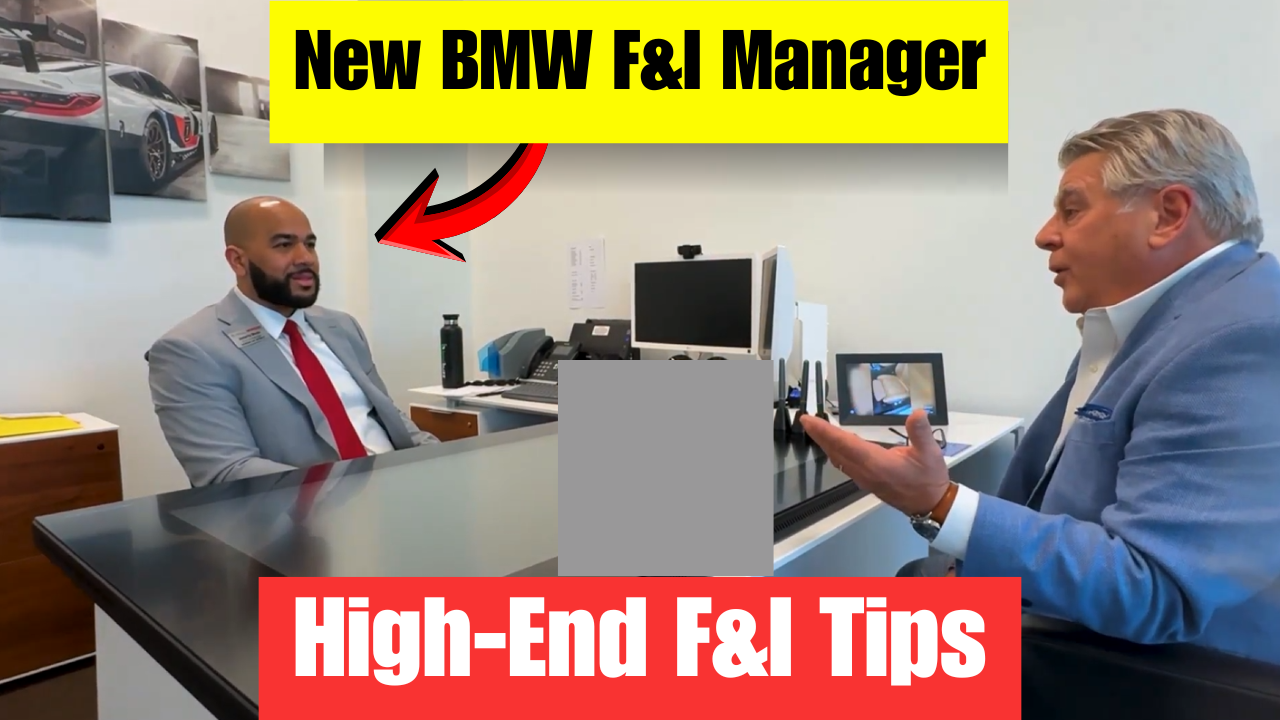
If you have recently transitioned from a mainstream brand to a high-end dealership, you may have experienced a frustrating reality. Your closing ratios dip. Your product penetration falls. Customers seem impatient, guarded, and uninterested before you even finish your presentation. This is not because high-end buyers do not want protection products. It is because the traditional F&I menu presentation was never designed for them. Presenting the F&I menu in high end dealerships requires a fundamentally different approach. The BMW, Mercedes-Benz, Land Rover, and luxury import buyer operates on a faster tempo. They are more researched, more decisive, and far less tolerant of long, sales-driven conversations. They are not emotionally buying transportation. They are executing a business transaction.
Gerry Gould, one of the most respected F&I trainers in the automotive industry and a core instructor inside Product Prep Live, teaches that success in highline stores comes from one critical mindset shift. You stop pitching and start telling. This article breaks down exactly how to present the F&I menu in high end dealerships using real-world strategies, scripts, and processes pulled directly from Product Prep training sessions. You will learn how to align with the highline buyer’s expectations, shorten your menu flow, increase lease product attachment, and raise PVR without creating resistance.
Key Takeaways
Before diving deeper, here are the four core principles that define successful F&I menu presentations in high-end dealerships.
-
Highline buyers respond better to a telling presentation than a selling pitch.
-
Early involvement with the customer dramatically increases trust and product acceptance.
-
Lease customers buy convenience and risk transfer, not traditional warranty language.
-
The first column of the F&I menu drives the majority of decisions and should be the primary focus.
Each of these principles will be expanded and applied throughout this article.
Why Presenting the F&I Menu in High End Dealerships Is Different
One of the biggest mistakes F&I managers make is assuming that all customers process information the same way. They do not.
High-end buyers are rarely impulse shoppers. Most of them begin their journey online, often weeks or months before they ever step foot in the dealership. By the time they arrive, they have already selected the vehicle, researched pricing, and narrowed down their decision. In many cases, 70 percent or more of the buying decision is already complete.
This creates a major challenge for F&I. When the manager is introduced late in the process, the customer perceives the F&I office as an interruption rather than a value-added experience. The longer the presentation, the more resistance builds.
In mainstream stores, customers are often willing to listen longer. They may be less researched and more open to education during the sale. Highline buyers, on the other hand, want efficiency. They want clarity. And they want to feel respected.
Gerry Gould explains it simply. Highline buyers want options. They just do not see enough value to pay for them unless the presentation aligns with their mindset.
That alignment begins with understanding their expectations.
High-end customers expect a premium experience that feels digital, professional, and streamlined. They do not want to feel sold. They want to feel informed. The F&I menu must match the brand experience they have already had throughout the purchase.
The Core Framework: Tell, Don’t Pitch
Inside Product Prep Live, one phrase is repeated constantly. Stop pitching. Start telling.
The word pitch implies persuasion. It implies pressure. It signals to the customer that a sale is about to happen. Highline buyers instinctively resist this.
A telling presentation, on the other hand, is informational. It is calm, confident, and neutral. You are not asking the customer to buy anything. You are simply explaining what is available so they can make an informed decision.
The difference may sound subtle, but the impact is massive.
When you tell instead of pitch, the customer’s defenses drop. They stop preparing objections and start listening. This is especially critical in high-end dealerships where customers value control and autonomy.
A telling presentation begins with expectation setting. You let the customer know the process will be simple, digital, and quick. You explain that your role is to show them the options available to enhance their ownership or lease experience. Then you move directly into the menu.
There is no buildup. There is no hype. There is no over-explaining.
You are not trying to convince them. You are simply showing them.
The Highline Telling Script Framework
While every F&I manager will adapt language to their own personality, the structure remains consistent across high-performing highline stores.
The presentation flows like this:
First, you frame the experience.
“This is going to be very easy. Everything is digital, and I just want to show you what is available to enhance your ownership or lease experience.”
Next, you identify the theme.
“This first option represents worry-free driving.”
Then, you explain features using “pays for” language.
“This pays for mechanical breakdowns after the factory warranty. This pays for tire and wheel damage from road hazards. This pays for key replacement. This pays for appearance issues that happen during everyday driving.”
After that, you present the payment.
“These would be your payments.”
Then you pause.
“Any questions?”
Finally, you invite a decision.
“Of these options, which one makes the most sense for you?”
This structure respects the customer’s time, intelligence, and autonomy. It also keeps the conversation focused on value rather than price.
Step 1: Get Involved Earlier or Accept Resistance Later
One of the most overlooked factors in F&I success at high-end dealerships is timing.
In many highline stores, deals are built online. Customers configure vehicles, place deposits, and negotiate pricing long before delivery. If the F&I manager is not involved until the customer physically arrives at the dealership, the relationship starts at a disadvantage.
From the customer’s perspective, the F&I manager appears late to the process. The customer wonders where you were during the weeks they were researching, deciding, and planning. That perceived absence creates skepticism.
Gerry Gould teaches that early involvement changes everything.
A simple introduction before delivery establishes familiarity and trust. It removes the feeling of being “popped” into the office. Instead, the F&I manager becomes part of the buying team.
This does not require a long phone call or deep product discussion. It only requires a brief, professional introduction.
The Highline Introduction Call Checklist
Effective early involvement follows a simple structure.
You introduce yourself and your role.
You explain that your job is to make the process easy and digital.
You confirm whether the customer has leased before.
You set expectations for future communication.
You ask permission to share options later in the process.
That is it.
The goal is not to sell. The goal is to establish relevance.
When customers feel that they matter to you, they are more willing to listen when it counts.
This single step alone has helped Product Prep Live members dramatically increase menu acceptance rates in highline environments.
Step 2: Build the Menu for Speed, Simplicity, and Curiosity
Highline buyers do not want to process complexity. They want clarity.
One of the most effective strategies taught inside Product Prep Live is focusing on the first column of the F&I menu.
While most menus display four columns, only one truly matters at the beginning. The first column represents the most comprehensive option, often described as worry-free driving or maximum protection.
By covering or visually minimizing the other columns, you remove overwhelm and direct the customer’s attention where you want it.
This does two things.
First, it simplifies decision-making. The customer is not trying to compare multiple options at once.
Second, it creates curiosity. When customers see that other options exist but are not yet explained, they naturally want to know what is underneath.
This curiosity keeps them engaged without pressure.
How to Run the First Column Like a Professional
When presenting the first column, discipline matters.
You explain each product using simple, consistent language. You avoid jargon. You avoid stories that run too long. You focus on what the product pays for.
You then show the payment and stop talking.
Silence is powerful.
When you ask “any questions” and pause, you give the customer permission to engage without feeling sold.
Only after the first column is fully explained do you explore alternatives or bundles, based on the customer’s response.
This approach shortens the presentation while increasing clarity and value perception.
Step 3: Lease Customers Buy Convenience, Not Coverage
One of the most common reasons highline F&I managers struggle with PVR is lease-heavy volume.
Leases can feel like a profit killer if they are approached the same way as retail deals. That is because traditional warranty language does not resonate with lease customers.
Gerry Gould reframes the entire lease conversation around convenience and non-essential spending.
Lease customers already accept essential spending. They know they will make payments, insure the vehicle, and maintain it. What they often fail to consider is the cost of everything else.
Run-flat tires. Low-profile wheels. Key fobs. Windshields. Dents and dings. End-of-lease charges.
These expenses are not hypothetical. They are common, expensive, and frustrating.
When you explain lease products as a way to eliminate surprise expenses and transfer risk, customers begin to see value.
You are no longer selling coverage. You are selling peace of mind and predictability.
Essential vs Non-Essential Spending Explained
This distinction is one of the most powerful teaching tools inside Product Prep Live.
Essential spending includes payments, insurance, and maintenance. Non-essential spending includes everything else that happens during ownership or leasing.
The key is helping customers recognize that non-essential spending is wasted money. It does not increase the value of the vehicle. It only benefits the manufacturer or next owner.
When customers understand this, protecting themselves becomes logical rather than emotional.
Step 4: Solve the Real Objection, “I Don’t See Enough Value”
Every F&I manager has heard it.
“I just don’t see the value.”
This objection is not rejection. It is a request for clarity.
Gerry Gould emphasizes a simple but powerful truth. Customers do not refuse products because they do not want them. They refuse products because they do not see enough value to justify the cost.
The solution is not to argue. The solution is to uncover what value means to them.
Ask the Right Follow-Up Questions
When a customer says they do not see enough value, resist the urge to explain more features. Features do not create value. Relevance does.
Instead, ask questions that invite reflection.
“What do you see the most value in?”
“Have you ever had to replace a tire or wheel unexpectedly?”
“Have you ever lost a key fob?”
These questions are not confrontational. They are experiential. They encourage the customer to connect past inconvenience with future risk.
Even customers who say they can afford repairs often acknowledge that repairs are annoying.
That is your opening.
Use Evidence, Not Emotion
High end buyers respond to facts. One of the most effective tools Product Prep teaches is the use of an evidence manual.
An evidence manual can include photos of damaged wheels, service invoices, tire pricing sheets, key replacement costs, and labor rate signage from the service department. The goal is not to scare the customer. The goal is to educate them.
When a customer sees that labor rates are over $300 per hour, value becomes tangible. When they see real pricing for run-flat tires, the abstract becomes real.
The evidence does the heavy lifting so the F&I manager does not have to.
This approach keeps the conversation professional, respectful, and rooted in reality.
Bundles, Payments, and Closing Without Pressure
Once value is established, simplicity becomes the priority. High end buyers do not want complexity. They want clarity.
Bundling products is one of the most effective ways to reduce friction. Instead of presenting multiple individual line items, a bundle frames the decision as a single choice that covers multiple risks.
For example, a bundle might include tire and wheel, key replacement, and appearance protection. Rather than discussing each separately, you position the bundle as a convenience package designed for how the customer drives.
When presented correctly, bundles feel thoughtful, not aggressive.
The “Free Throw” Close
Gerry Gould often refers to the “free throw” question.
After presenting the first column and explaining what each option pays for, you stop and ask, “Do you have any questions?”
Then you stay quiet.
This pause is powerful. It gives the customer space to process. It invites dialogue rather than resistance.
From there, you transition to choice.
“Of everything I just shared, which option makes the most sense for you?”
This is not a hard close. It is a guided decision. The customer feels in control, and you stay aligned with the telling approach.
Common Mistakes When Presenting the F&I Menu in High End Dealerships
Even experienced F&I managers can struggle in high end environments. Here are some of the most common mistakes Product Prep sees when managers transition into these stores.
One mistake is talking too much before showing numbers. High end buyers want efficiency. Long explanations before payments appear create impatience.
Another mistake is presenting all four menu columns at once. This overwhelms the customer and invites comparison instead of understanding.
Waiting until delivery day to introduce yourself is another costly error. Late involvement creates skepticism and defensiveness.
Using pitch language instead of telling language immediately raises the customer’s guard.
Finally, treating lease customers like retail customers ignores how they actually buy.
Correcting these mistakes does not require more effort. It requires better structure.
Key Compliance Essentials for High End F&I Managers
Compliance is not optional in any dealership, but high end stores face additional scrutiny due to transaction size and customer sophistication.
Product Prep emphasizes compliance as a foundation, not a limitation.
Consistent Menu Presentation
Consistency protects both the dealership and the customer. Presenting the same menu structure to every customer reduces risk and reinforces fairness.
Digital menus help document presentation and acceptance or declination. This is especially important in high end stores where customers expect transparency.
Clear Product Descriptions
Avoid jargon. Explain what products do in plain language. Focus on what they pay for rather than how they are structured.
This clarity reduces misunderstandings and post-sale complaints.
Documentation and Disclosure
High end buyers read paperwork. Make sure disclosures are accurate, complete, and clearly explained.
Product Prep Live sessions often include compliance refreshers to ensure managers stay current with regulations while maintaining a smooth customer experience.
How Product Prep Live Drives Sales and Compliance
Many training programs rely on static videos or generic modules. Product Prep Live is different.
It combines structured curriculum with real-time coaching, live role-play, and direct feedback from trainers like Gerry Gould.
Real-Time Coaching That Changes Behavior
One of the biggest advantages of Product Prep Live is immediate application. Managers do not just learn concepts. They practice them.
Live sessions allow managers to workshop scripts, refine menu flow, and adjust language for their specific brand and customer base.
This hands-on approach accelerates improvement and builds confidence.
Measurable Results
Dealerships that participate in Product Prep Live often see measurable gains within weeks. Increases in product penetration, higher PVR, and smoother customer interactions are common outcomes.
More importantly, managers report feeling more in control of their process. That confidence translates directly to better results.
How Product Prep Compares to Other Training Options
Traditional training often focuses on theory without context. Some programs rely heavily on one-time workshops with little follow-up.
Product Prep stands out because it combines personalization, accountability, and ongoing support.
Managers receive structured modules, live coaching, certification opportunities, and progress tracking. VIP onboarding ensures that even new F&I managers are supported from day one.
Unlike generic training, Product Prep adapts to brand differences, store culture, and market conditions. That flexibility is critical in high end environments.
Practical Advice for Immediate Improvement
If you want to improve how you present the F&I menu in a high end dealership, start with these steps.
Replace pitch language with telling language. Focus on availability and enhancement rather than selling.
Get involved earlier in the buying process. Introductions build trust.
Run the menu through the first column first. Keep it simple.
Frame lease products around convenience and non-essential spending.
Use evidence to support value rather than emotion.
Ask better questions and allow silence to work for you.
These changes do not require more time. They require better structure.
FAQs
1. How quickly can Product Prep training impact PVR?
Many dealerships see improvements within the first 30 to 60 days, especially in menu flow and product attachment.
2. Is Product Prep suitable for high end dealerships only?
No. While the strategies work exceptionally well in high end environments, the principles apply across brands and market segments.
3. How does Product Prep help with compliance?
Product Prep integrates compliance best practices into every process, ensuring consistency, documentation, and clarity.
4. Can experienced F&I managers still benefit?
Absolutely. Many seasoned managers discover new language, structure, and efficiency techniques that elevate performance even further.
Conclusion
Presenting the F&I menu in high end dealerships requires a different mindset. The customers are informed, efficient, and value convenience above all else. By shifting from pitching to telling, getting involved earlier, focusing on the first column, and framing products around convenience and non-essential spending, F&I managers can dramatically improve results. Product Prep, led by trainers like Gerry Gould, provides the structure, coaching, and accountability needed to make these changes stick.
By the way, you’re invited to check out our world-class F&I training program where the average F&I Manager increases their PVR by over 30% in the first month. You’ll have access to 100+ hours of training videos personalized to your weaknesses. Plus, you get exclusive access to see Gerry Gould LIVE twice per month to ensure you continue to grow your skillset and income. Come join a community of the top F&I Managers in the country and the #1 F&I Training in the world. For $149 you can pay that off with one extra deal we’ll personally teach you in the first week of training.