
How To Present The F&I Menu in 2025
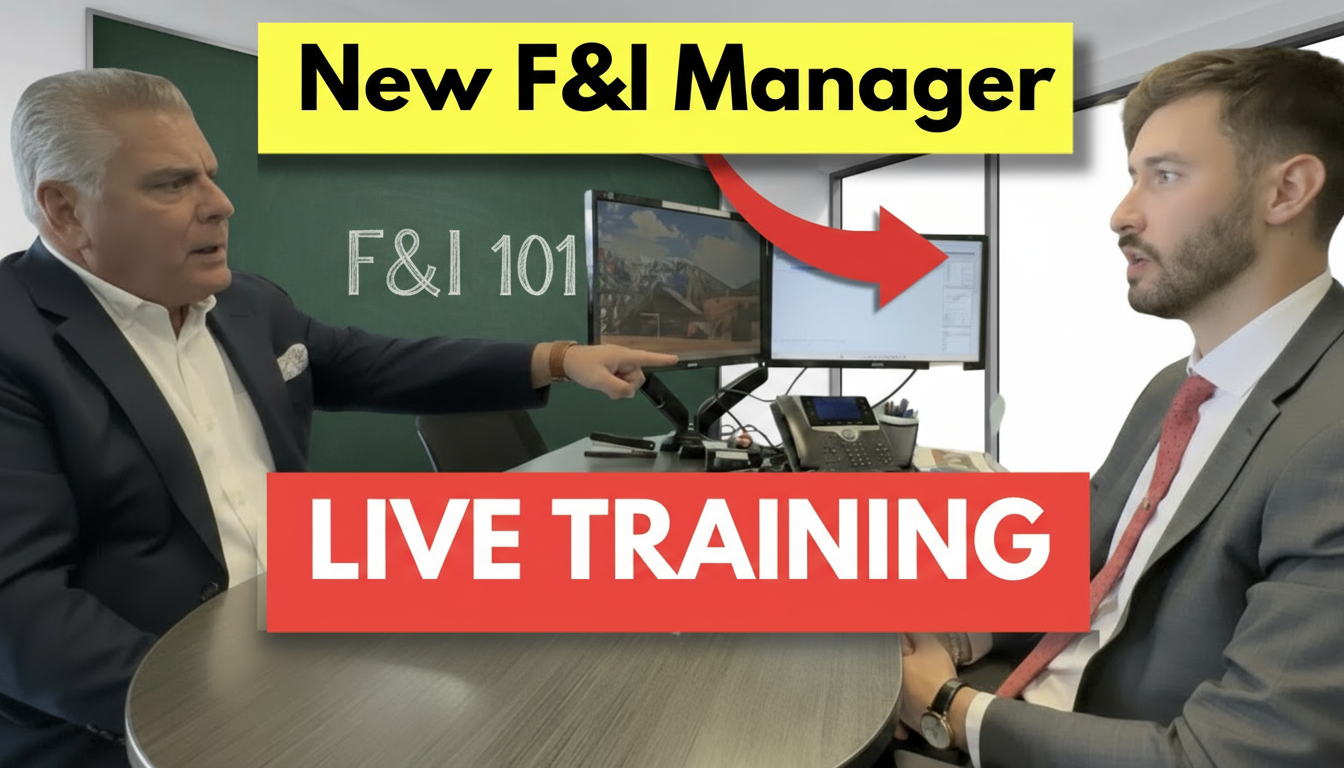
Are your customers zoning out during the menu presentation? You’re not alone. Most F&I managers lose customer attention within minutes—not because their products lack value, but because their presentation does. In today’s dealership environment, where customers have limited time and endless information, success depends on simplicity, structure, and confidence.
A great F&I presentation doesn’t just explain products—it engages customers, builds trust, and leads them to see real value in the options you present. According to industry expert Gerry Gould, the difference between a good F&I manager and a great one lies in how they present, not what they sell.
In this article, we’ll break down Gerry’s proven strategies on how to present the F&I menu in 2025, helping you streamline your process, improve conversions, and protect your PVR margins in an increasingly competitive landscape.
Key Takeaways
- Why shorter, simpler menu presentations close more deals
- How to use a 3-column menu to streamline product offerings
- The power of consistent scripts and structured delivery
- The “tell, don’t sell” approach that builds trust and boosts PVR
Why F&I Menu Presentation Matters in 2025
The F&I menu is the bridge between the sale and customer protection, yet in 2025, that bridge is shorter than ever. Today’s buyers arrive more informed, more skeptical, and far less patient. They’re not interested in hearing every detail about every product—they want relevance, transparency, and control.
Modern F&I success hinges on the manager’s ability to balance information and empathy. Instead of overwhelming customers with data, top performers are simplifying their message and shifting their focus from “coverages” to “value.”
As Gerry Gould puts it, every product presentation should answer one critical customer question:
“What does this pay for so I don’t have to?”
This mindset reframes the F&I process. Rather than selling protection, you’re positioning peace of mind. And that’s a shift customers respond to—especially when attention spans are short and trust is earned in seconds.
The Problem with Traditional F&I Menu Presentations
For decades, F&I presentations have followed the same script: go down the list, describe every product in detail, and hope something sticks. But this “tell-all” approach is exactly what drives customers away.
Too much information leads to confusion. Over-explaining leads to impatience. And when a manager starts selling instead of presenting, the customer’s guard goes up.
Gerry Gould calls it “verbal vomit”—that moment when good intentions turn into information overload. The customer tunes out, the presentation loses rhythm, and the deal weakens.
Instead, Gould teaches a counterintuitive truth:
“The presentation doesn’t sell anything. The conversation after it does.”
That’s why the most effective F&I professionals use a two-part system: present briefly, engage deeply. First, they lay the foundation with clear, structured explanations. Then they ask strategic questions to uncover value, overcome objections, and close with confidence.
The takeaway? Stop trying to sell everything at once. Present first, connect later. The results speak for themselves—higher acceptance rates, fewer objections, and a smoother process for everyone involved.
How to Present the F&I Menu in 2025
Step 1 – Simplify the Structure: Use the 3-Column Menu
If your F&I menu looks like a spreadsheet, your customers will treat it like one. That’s why the three-column format has become a best practice across top-performing dealerships. It’s simple, clean, and visual.
Label your options clearly:
- Total Coverage: Complete protection for customers who want full peace of mind.
- Practical Coverage: Balanced protection for common driving conditions and risks.
- Core Coverage: Basic essentials for budget-conscious buyers.
This layout guides the conversation. It helps customers see their choices instead of just hearing them. And when paired with brief, consistent language, it keeps the focus on value—not clutter.
Consistency is also key. The only time your presentation should vary is when the deal structure changes—cash, lease, or finance. Otherwise, the flow, tone, and timing should stay the same. As Gould says, “Top F&I managers do the same thing every time. Consistency drives performance.”
Step 2 – Lead with Value, Not Features
Most F&I managers describe products with good intentions but the wrong words. They say “protects your car” instead of “pays for repairs.” They focus on features rather than outcomes. And that subtle difference costs sales.
In 2025, language is everything. Customers respond better to financial relief than to mechanical jargon. Instead of saying:
“The service contract covers your engine and transmission,”
say:
“The service contract pays for mechanical breakdowns so you don’t have to.”
That single shift reframes the product as a benefit, not a cost. When you focus on what the product pays for, you tap into the customer’s natural desire for security and predictability.
It’s a simple change that adds enormous value—and it’s one reason Product Prep-trained F&I managers consistently outperform their peers.
Step 3 – Save Selling for the End
Here’s where many presentations go off track: the manager starts selling mid-way through the menu. They get excited, sense a potential “yes,” and begin overexplaining. But that excitement leads to early resistance.
The better approach is to separate presentation from persuasion. Deliver your overview first—simple, steady, professional. Then pause, and use what Gerry Gould calls the “free no” technique.
Ask:
“Do you have any questions about what I just shared with you?”
When the customer says “no,” it signals psychological closure. Then, move directly into:
“Great. Which option works best for you?”
Now, you’ve invited a decision, not forced a sale. If objections come up (and they will), that’s your moment to engage.
Pivot with value-based questions:
- “What’s your understanding of the factory warranty?”
- “What’s your understanding of how insurance works in a total loss?”
- “How much would it cost to replace those tires or wheels?”
These questions guide customers to realize value on their own. It’s not pressure—it’s partnership.
Step 4 – Master Consistency Through Repetition
Repetition isn’t just practice—it’s professionalization. The best F&I managers don’t wing it; they refine it. Every presentation follows the same rhythm, tone, and flow.
This consistency builds confidence, shortens transaction times, and improves CSI scores. New F&I managers, however, often try to copy their more experienced peers. The problem? They mimic style without mastering structure.
That’s why Product Prep’s training emphasizes memorizing your own “word track”—a personalized version of the presentation script tailored to your store’s products. Once you know it inside and out, you can adapt naturally to any customer.
As Gould reminds his students:
“You can’t build off chaos. Structure first, style second.”
When your delivery is consistent, your results become predictable. And in a role where every deal counts toward PVR, predictability is power.
The Modern Customer: Attention Span and Buying Psychology
It’s no secret—customers today have shorter attention spans than ever. They multitask through major decisions and expect fast, frictionless communication at every stage. This reality makes presentation simplicity a competitive advantage.
A five-minute presentation that hits emotional and logical triggers is far more effective than a fifteen-minute technical rundown. When you speak clearly, customers listen. When you connect with stories, they remember.
Use conversational storytelling. For example:
“If your car breaks down on the side of the road, this plan pays for the tow and the repairs. You don’t even have to make the call—just show the card.”
Short, vivid stories like this help customers visualize the benefit instead of calculating the cost.
The language you use also shapes how customers feel. Saying “protects” sounds optional. Saying “pays for” sounds essential. These subconscious cues matter, especially when customers are mentally comparing options.
The takeaway is clear: shorter attention spans demand smarter storytelling. Keep your tone natural, your flow conversational, and your examples relatable. The goal isn’t to impress customers with product knowledge—it’s to guide them toward confident decisions.
The Power of Questions and Timing
In every great F&I presentation, timing separates good from great. The best managers know when to talk, when to pause, and when to let the customer think. The conversation that happens after the presentation is where the real selling begins.
Ask Before You Sell
Customers respond better to questions than to pitches. When you invite them into the conversation, you shift from a sales presentation to a guided discussion. This helps them feel in control and seen, not pressured.
Try these value-focused questions:
- “What’s your understanding of the insurance company’s responsibility in a total loss?”
- “What’s your understanding of what the factory warranty really covers?”
- “What’s your understanding of the cost to replace a rim or tire today?”
Each question uncovers a gap in knowledge and sets you up to explain the value of your products naturally. Instead of defending the price, you’re clarifying the protection.
These questions also slow the pace of the conversation, allowing you to listen. And that’s critical—when customers talk, they reveal what matters to them most. You can then align your recommendations with their actual needs, not assumptions.
When Product Prep trainees adopt this questioning method, they often report faster closes and fewer objections. The shift is simple but powerful: they move from convincing to coaching.
Build Momentum with Empathy
Roughly 70 percent of customers will initially say “no.” It’s not rejection—it’s instinct. People are conditioned to protect their wallets and say no before they understand value. Great F&I managers know this and prepare for it.
Instead of pushing back, they lean in with empathy.
Here’s how Gerry Gould handles it:
When a customer declines all products, he responds with,
“That’s okay. These options aren’t for everyone. But in my experience, when people choose not to enroll, it’s usually because they don’t see enough value to justify the cost. Would you say that’s how you feel?”
Once the customer agrees, he continues:
“If money weren’t an issue, which two options would you pick?”
Now, the customer moves from rejecting everything to identifying preferences. When they select options, you can reinforce their reasoning:
“That makes sense. You mentioned road conditions earlier—tire and wheel would be smart for you.”
It’s a conversation rooted in respect, not pressure. By empathizing first, you keep momentum alive and guide the customer back to value. This subtle art is what separates the average performer from the top producer.
Common Mistakes F&I Managers Make
Even the most talented F&I professionals fall into habits that limit results. Recognizing and correcting these mistakes can immediately raise your closing ratio.
1. Selling during the presentation instead of after it
The biggest trap is over-explaining mid-menu. Present first, sell later. The presentation should inform, not convince.
2. Using inconsistent scripts
Customers notice hesitation. A scattered delivery signals uncertainty. Learn one structured flow, then repeat it until it feels natural.
3. Skipping introductions
Your authority begins the moment you meet the customer. Don’t say “I’m one of the finance managers.” Say, “I’m the finance manager.” Confidence sets the tone.
4. Ignoring body language and fatigue
If the customer leans back, crosses arms, or glances at their phone, you’ve lost them. Pause, smile, and reset. A brief personal comment—“You’ve had a long day, right?”—can reengage attention.
5. Overloading with data
Customers don’t buy percentages. They buy peace of mind. Focus on stories, outcomes, and emotional value instead of specs and stats.
Here's a pro tip: Keep your presentation under seven minutes before asking for the sale. The shorter the talk, the longer the customer listens.
How to Personalize Your Presentation Without Losing Structure
Personalization doesn’t mean reinventing the wheel for every customer. It means adding the right amount of personality within your structure. The structure is your safety net—the tone is your style.
1. Use humor to break tension
A light, relatable comment like “You’ve seen those bundle commercials, right? This is your version of that—car edition” makes the presentation human and memorable.
2. Adapt your tone, not your process
A first-time buyer might need reassurance; a seasoned lessee might appreciate efficiency. Adjust your energy and examples, but never the sequence. Consistency builds professionalism.
3. Localize your examples
Reference real driving conditions or common repairs in your area:
“Around here, one pothole can ruin a rim. This program pays to replace it.”
Product Prep trainers often say, “Personal doesn’t mean unpredictable.” Stay within your structure, but let your authenticity show through. Customers buy from people, not scripts—and when your structure frees you to be genuine, your close rate climbs.
How to Build Mastery in the Modern F&I Presentation
To excel in today’s F&I environment, structure isn’t optional—it’s the foundation of every successful presentation. The best managers know their process so well that it feels natural, almost conversational. This kind of mastery doesn’t come from memorizing scripts; it comes from understanding the why behind every step.
Modern F&I leaders focus on three things: clarity, confidence, and consistency.
They use a defined structure to ensure every customer receives the same professional experience, but they also adapt their tone and timing to match each interaction. The magic happens when structure meets personalization.
Refine Your Word Tracks
Your word track is your roadmap. It should outline what to say, when to pause, and how to transition between products. Keep it conversational, not robotic. Rehearse it until it becomes second nature—so natural that you can focus on the customer instead of your next line.
Practice Live Scenarios
The fastest way to improve your delivery is through repetition under realistic conditions. Role-play with peers or managers and record your sessions. Watch for pacing, tone, and nonverbal cues. A confident presentation comes from muscle memory, not just product knowledge.
Embrace Feedback
Even experienced F&I managers benefit from constructive critique. Ask your peers or mentors to review your delivery and highlight areas to simplify or strengthen. The goal is to make your message sharper and your presentation more engaging.
Stay Current on Compliance and Trends
Customer expectations and regulations evolve every year. Keep your word tracks compliant and relevant by reviewing federal and state guidelines regularly. A well-informed presentation builds credibility and keeps your deals protected.
When you combine structure, practice, and adaptability, your presentation stops sounding like a pitch and starts feeling like a genuine conversation. That’s when customers stop resisting—and start saying yes.
FAQs
1. How long should a modern F&I menu presentation take?
Ideally under seven minutes before inviting questions or decisions. Short, structured presentations keep customers attentive and make your follow-up conversation more productive.
2. What’s the ideal order for presenting products?
Start with service contracts, then move to GAP or total loss protection, followed by tire and wheel, maintenance, and appearance protection. The flow should feel logical, moving from essential to optional.
3. How can I adapt this structure for leases vs. finance deals?
For leases, focus on wear-and-tear, tire and wheel, and key replacement. For finance, emphasize service contracts, GAP, and maintenance. Product Prep’s Playbook includes word tracks for both scenarios.
4. What if the customer says they’ll buy protection “later”?
That’s your cue to educate gently. Explain that these programs are available only at the time of purchase, often at better rates. Use empathy, not urgency: “I understand you want to wait, but this is when you’re fully eligible.”
Conclusion
In 2025, mastering the F&I menu presentation isn’t about adding more—it’s about simplifying for maximum impact. The modern customer values clarity, honesty, and confidence. The manager who can deliver all three will win trust and close more deals.
By applying Gerry Gould’s methods and the Product Prep Playbook, you’ll transform your F&I presentation into a structured, customer-friendly process that feels less like a pitch and more like a conversation.
Every dealership faces the same challenges: shorter attention spans, tighter compliance standards, and higher performance expectations. The solution is structure—delivered with authenticity. That’s what Product Prep teaches, and that’s what drives results.
If you’re ready to modernize your F&I approach, reduce customer resistance, and boost your PVR, there’s no better time to start.
By the way, you’re invited to check out our world-class F&I training program where the average F&I Manager increases their PVR by over 30% in the first month. You’ll have access to 100+ hours of training videos personalized to your weaknesses. Plus, you get exclusive access to see Gerry Gould LIVE twice per month to ensure you continue to grow your skillset and income. Come join a community of the top F&I Managers in the country and the #1 F&I Training in the world. For $149 you can pay that off with one extra deal we’ll personally teach you in the first week of training.