
How To Present Numbers Like A Top 1% Car Salesperson
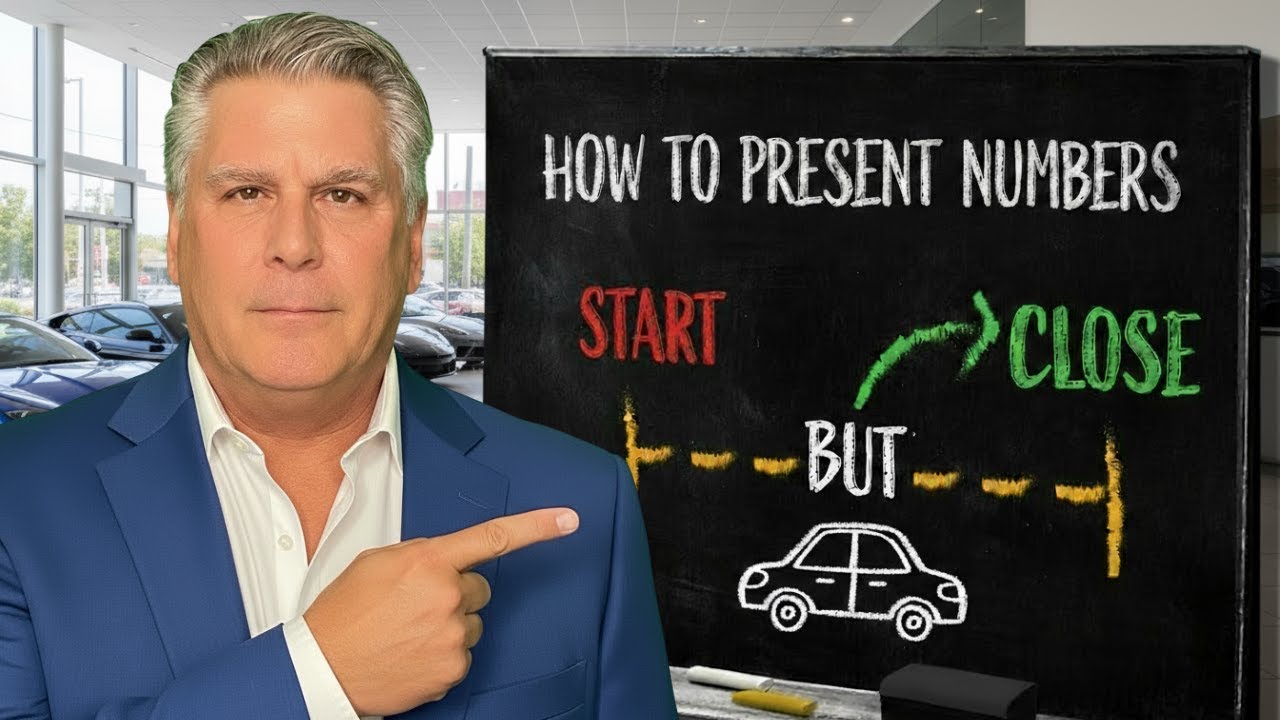
Ever notice how some salespeople can present numbers, handle objections, and close deals without breaking a sweat? Meanwhile, others lose the customer’s attention or confidence the moment the conversation shifts to price. Presenting numbers is not just about math. It is about psychology, control, and communication. It is where the best salespeople separate themselves from the average ones. The way you present those numbers determines whether the customer sees value or cost, clarity or confusion.
According to Product Prep’s National Trainer, Gerry Gould, top-performing salespeople share one thing in common: they do not fear the number presentation. They own it. This confidence does not come from memorizing scripts. It comes from understanding the customer, knowing your process, and staying calm under pressure.
If you want to master how to present numbers like a top 1% car salesperson, this article will walk you through every step, from setting the stage to handling tough objections like “I need to think about it.” By the end, you will have a repeatable process you can use daily to win more deals, build stronger relationships, and boost your overall sales performance.
Key Takeaways
-
Learn how to confidently present pricing and payment options that build trust instead of tension.
-
Master the “dual question” technique to uncover the real reason behind objections.
-
Stay in control of the conversation without ever leaving your seat.
-
Turn customer hesitation into opportunities for clarity, connection, and closure.
What Does It Mean to ‘Present Numbers Like a Top 1% Salesperson’?
Presenting numbers like a professional is not just showing figures, it is about showing confidence.
The average salesperson focuses on what is on the paper: price, payment, trade value, down payment, interest rate. But the top 1% understand that those numbers only matter after the customer feels heard, valued, and understood.
Think of it this way. Customers do not buy the number, they buy the belief that the deal makes sense for them. And that belief is built through trust and tone.
A top 1% salesperson knows:
-
When to present the numbers (after rapport is built).
-
How to present them (with calm authority).
-
What to say after the customer reacts (using clarifying questions, not defensive statements).
The truth is that the number presentation should be the easiest part of the sale. If you have done your job upfront by discovering their needs, building value in the product, and connecting on a personal level, then presenting numbers becomes a natural continuation of the conversation.
Confidence is not about knowing the numbers, it is about knowing how to control the conversation around them.
The Step-by-Step Process to Present Numbers Like a Pro
Step 1: Set the Stage Before You Ever Show a Number
The secret to a smooth number presentation starts long before the pencil hits the paper.
Top salespeople know that customers make emotional decisions before rational ones. They have already decided whether they like you before they decide whether they like your price.
That is why the groundwork you lay in the meet-and-greet, test drive, and needs analysis determines how the number conversation will go later.
Ask genuine, open-ended questions that show you care:
-
“What made you choose this model?”
-
“Which features are most important to you?”
-
“Why is this the right time to upgrade?”
These questions create emotional value. They shift the focus from price to purpose.
When you finally present the numbers, the customer sees a solution to their problem, not just a transaction.
It is what Gerry Gould calls “emotional preconditioning.” By the time you are ready to review pricing, the customer is already mentally saying yes.
Step 2: Present With Confidence, The Format Does Not Matter
Dealers often obsess over presentation formats: handwritten worksheets, four-squares, or digital menus. But according to Gerry Gould, the format does not close deals, the salesperson does.
Whether you use paper, tablets, or CRM-generated proposals, the goal is the same, clarity and control.
Here is the golden rule: Stay seated.
When salespeople stand up, shuffle papers, or walk away to “talk to the manager,” customers instantly sense uncertainty. It creates distance, both literally and emotionally.
Instead, stay calm, stay seated, and review each number slowly and clearly. Maintain eye contact and let your tone project confidence.
Example:
“Here’s where we are. This is the price of the vehicle, your trade value, and the payments based on the options we discussed. Everything here is based on current market values.”
Simple, direct, and transparent.
Customers buy confidence. When you are calm and clear, they assume the deal is fair.
Step 3: Use Dual Questions to Find the Real Objection
Every salesperson hears it:
“You are not giving me enough for my trade.”
“The payment is too high.”
“The price is too much.”
Most freeze. The top 1% smile, because they know this is not an objection, it is interest.
Here is how Gerry Gould teaches it:
Instead of reacting defensively or running back to the desk, ask a dual question.
Example:
“Are you trying to get more for your trade to lower your monthly payment, or is there another reason?”
This one question changes everything.
It turns confrontation into conversation. It forces the customer to reveal their true motivation, and that is where the real deal lives.
If they say, “I just want to lower my payment,” you now know the issue is affordability, not value.
If they say, “The other dealer offered me more,” you can now address comparison logically, not emotionally.
Pro Tip:
After you ask a dual question, pause. Count “One Mississippi, two Mississippi, three Mississippi.” Silence gives the customer space to think and respond truthfully.
This is how you uncover truth instead of tension.
Step 4: Handle Price and Payment Objections Like a Pro
Top salespeople do not avoid objections, they expect them. Because they know every objection is just a question in disguise.
Let’s look at three common ones and how a 1% salesperson handles them:
1. “The payment’s too high.”
“That’s not a problem. We can lower the payment with more money down, or we can extend the term. Which do you prefer?”
Notice what happened?
You took control and gave choices, not concessions. You stayed in the seat and guided the discussion back to options instead of obstacles.
2. “The price is too high.”
“I understand. On what basis are you saying it is too high? Are you comparing it to something else?”
This forces the customer to define “too high,” which usually reveals they are comparing apples to oranges. From there, you can build value in your vehicle’s features, warranty, and condition.
3. “You’re not giving me enough for my trade.”
“We use real-time market data from Kelley Blue Book and similar sources. Based on what we saw during the inspection, that is a very strong number for your vehicle. What value did you have in mind?”
Again, control through calm explanation. No flinching. No defensiveness.
Remember, customers are not objecting to the number, they are objecting to uncertainty.
Your tone and confidence eliminate that uncertainty.
Step 5: The “Think About It” Close, Turning Hesitation Into Action
Few phrases make a salesperson’s stomach drop faster than:
“I just want to think about it.”
But here is the truth, thinking about it usually means they do not know how to decide.
One of the best closers Gerry Gould ever met sells 40 cars a month at a Honda store. When a customer tells him they need to think about it, he responds instantly:
“I understand. What other vehicles are you considering?”
This question reframes the entire moment. It assumes the only reason they are not buying your car today is because they are comparing it to something else.
If they mention another car, the salesperson immediately asks:
“When you test-drove that Camry, how did it compare to the Honda you just drove?”
Now the customer is subconsciously selling themselves on the car in front of them.
And if they say, “I did not test-drive the Camry,” he responds:
“Why not? You have already got everything you want right here.”
Every path leads back to the deal.
If the customer says, “I’m not considering any other cars,” he follows up:
“Then what’s stopping you from moving forward today?”
And if they mention needing to “talk to my wife,” he turns it into collaboration:
“That makes sense. What’s her name? What do you think she would say about this car?”
Sometimes he even suggests:
“Let’s give her a quick call or FaceTime. She will probably appreciate being included.”
It is confident, conversational, and human.
It does not pressure, it progresses the deal.
This is how you transform “I need to think about it” from a stall into a sale.
The Psychology of Staying in Control
When customers feel uncertainty, they look for leadership.
That is why top salespeople never appear rushed, defensive, or desperate. They stay calm, stay seated, and let their confidence speak louder than their words.
The moment you stand up, leave the desk, or start flipping papers, customers sense anxiety. They assume you are unsure or trying to “check with the boss.” The illusion of control is gone.
Instead, stay present. Look them in the eye. Ask clear, confident questions.
It is what Gerry Gould calls “Value Posture.”
When you stay in your seat, you project authority and professionalism. The customer mirrors your calmness. You become the trusted advisor, not the negotiator.
Remember, customers do not want to argue, they want assurance. When you lead with composure, you create it.
How Product Prep Builds Top 1% Salespeople
Product Prep’s sales training is not about scripts or slogans. It is about transformation.
Led by industry veteran Gerry Gould, Product Prep’s live and digital training programs are designed to build confident, consistent, and customer-focused sales professionals.
Here is what makes Product Prep different:
1. Role-Play Driven Training
You do not just watch videos, you practice. Every objection, every scenario, and every deal conversation is rehearsed until it feels natural. This repetition builds confidence that holds under pressure.
2. Proven Processes
From meet-and-greet to final pencil, Product Prep’s framework is designed around real-world results. Salespeople learn to manage the entire customer journey, not just the close.
3. Live Coaching with Gerry Gould
Dealership teams gain direct access to one of the nation’s most respected trainers. Gerry’s live sessions focus on tone, timing, and technique, with interactive feedback that drives instant improvement.
4. Real Results
Dealerships trained through Product Prep have reported measurable gains in close ratios and gross retention. More importantly, they have seen cultural shifts where sales teams communicate better, trust each other, and follow the process with consistency.
5. Training That Fits Every Sales Level
Whether you are new to car sales or a seasoned closer, Product Prep’s modules are built for adaptability. Each lesson connects mindset, behavior, and dialogue so learning sticks.
When you learn to present numbers like a top 1% salesperson, you are not just selling cars. You are mastering human conversation.
FAQs
1. Do I need to use a four-square worksheet to be effective?
Not necessarily. The presentation tool is not what closes the deal, it is how you use it. Whether handwritten or digital, your goal is to guide the conversation clearly and confidently.
2. How can I build confidence when presenting numbers?
Practice. Role-play objection scenarios daily. Record yourself presenting numbers, listen to your tone, and refine your pacing. Confidence is built through repetition, not theory.
3. What should I do when a customer objects to price immediately?
Stay calm and ask clarifying questions. “On what basis are you saying that?” often uncovers misinformation or assumptions. Then rebuild value by explaining market data and your dealership’s standards.
4. How do I keep control without sounding pushy?
Ask questions that keep the conversation moving. Replace statements with curiosity. Instead of saying “You should buy today,” try asking “What’s stopping you from moving forward today?”
5. What if the customer walks after I present numbers?
Follow up respectfully. Send a personalized message referencing their needs, not your price. Many buyers return because they remember how you made them feel, confident and respected.
Conclusion
Presenting numbers like a top 1% car salesperson is not about having the lowest price or the slickest pitch. It is about mastering conversation control, staying calm, confident, and customer-focused.
When you understand that objections are just questions waiting to be answered, you stop fearing the process and start enjoying it.
You do not chase deals, you guide them. You do not convince customers, you help them realize what already makes sense.
That is what the best salespeople do. And that is what Product Prep teaches every day.
By the way, you’re invited to check out our world-class F&I training program where the average F&I Manager increases their PVR by over 30% in the first month. You’ll have access to 100+ hours of training videos personalized to your weaknesses. Plus, you get exclusive access to see Gerry Gould LIVE twice per month to ensure you continue to grow your skillset and income. Come join a community of the top F&I Managers in the country and the #1 F&I Training in the world. For $149 you can pay that off with one extra deal we’ll personally teach you in the first week of training.