
From Lot Attendant To General Manager
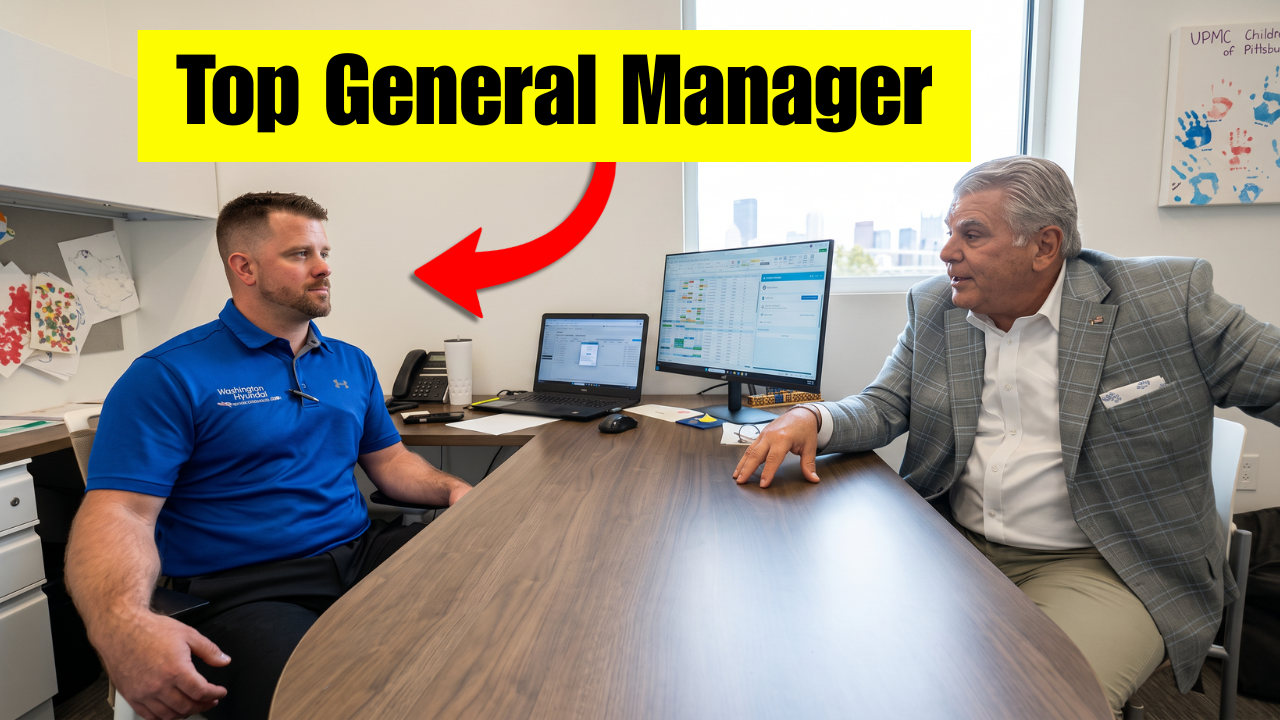
What does it really take to go from lot attendant to General Manager at a car dealership?
It is easy to look at a GM and only see the title, the office, and the responsibility for the entire store. What you do not always see is the path that built that leader. In Brian Flannery’s case, that path started at the ground level as a lot attendant before moving through sales, F&I, used car management, sales management, and eventually into the General Manager seat at Washington Auto Mall Hyundai.
That is what makes this conversation with Gerry Gould so valuable. It is not just a career story. It is a dealership leadership lesson. Brian’s journey shows what happens when someone learns the business from the ground up, earns respect before asking for authority, and builds the habits needed to run a store with consistency.
For owners, GMs, sales managers, F&I managers, and future leaders, the lesson is clear. Advancement in the car business is not about wanting the title. It is about becoming the person the dealership can trust with the title.
Key Takeaways
- Great General Managers are developed through exposure to every part of the dealership.
- F&I experience gives future GMs a clearer view of deal structure, compliance, accountability, and delivery.
- Consistent processes stabilize the store, protect gross, and improve team performance.
- Future leaders must earn respect before they receive authority.
From Lot Attendant To General Manager
Brian Flannery has been in the car business for 16 years. Before becoming a General Manager, he started as a lot attendant. From there, he moved into sales while going through college, gained experience in F&I, became a used car manager, worked the desk, moved into sales management, and eventually became a GM.
A strong GM cannot only understand one piece of the store. Sales, F&I, service, used cars, the desk, inventory, compliance, reporting, customer experience, and culture all affect each other. When a GM has lived through multiple positions, they see problems differently and spot process breaks faster.
Brian’s story also shows that the path was earned. He did not jump from lot attendant to General Manager overnight. He built credibility over time by learning, working, adapting, and taking each role seriously.
For today’s dealership leaders, this is a reminder to look closely at the people already inside the store. Your next manager may already be on your team.
Why General Managers Need Experience Across The Store
A General Manager is responsible for the whole operation. That is why experience across sales, F&I, desking, and used car management is so valuable.
Sales experience teaches customer flow. It shows future GMs how objections are handled, how follow-up is managed, and where deals get lost.
F&I experience gives a future GM a deeper look at the deal after the customer says yes. Brian made the point that F&I is not just paperwork. It is the last line of defense. It is where deal structure, compliance, lender requirements, product presentation, and final delivery all come together.
That perspective is critical for a General Manager. Without it, a GM may underestimate F&I’s impact on profit, compliance, and customer experience.
Used car management adds another layer. It teaches discipline, judgment, inventory awareness, pricing control, and fast decision-making.
That combination is what shapes a stronger General Manager. A real GM has to see the store as one connected operation.
The Best Advice For Future General Managers
One of Brian’s strongest pieces of advice was simple: quit worrying about the next job.
That may sound strange in a business where ambitious people want to move up. But Brian’s point is clear. The people who talk about the next title the most are often not focused enough on doing the current job well. They want the promotion, but they are not always building the habits that make the promotion make sense.
A future General Manager should make their goals known. There is nothing wrong with telling leadership, “I want to grow here.” The problem starts when someone talks more than they perform. A title does not make someone a leader. Daily behavior does.
If someone wants to become a manager, they should already be doing manager-like things. They should show up prepared, follow the process, protect the customer experience, help teammates, learn the numbers, and stay accountable.
Brian explained that the people who successfully moved up in his store were not constantly asking for the next role. They made their goals known, then they put their head down and worked. By the time they moved into the next position, they already had the respect of their peers.
That is the kind of person a GM can trust. Someone who earns respect before authority will have a much smoother transition into leadership.
How General Managers Create Consistency In The Dealership
Consistency is one of the biggest themes in Brian’s leadership style.
When Gerry asked what Brian put into place to stabilize performance, Brian talked about following the process every time. Not sometimes. Not only when the deal is easy. Every time.
Dealerships can fall into the trap of treating every deal like an exception. Salespeople may take the path of least resistance. F&I managers may do the same. Desk managers may adjust the process based on pressure, convenience, or habit. When that happens, consistency disappears.
A strong General Manager does not allow that. The GM sets the standard and makes sure the team follows it. The goal is to create a process that protects the customer experience, improves communication, supports F&I, and gives the dealership a better chance to retain gross.
Brian also gave a simple example that every GM can apply: the team must be ready 10 minutes before the day starts. Not walking in at the start time. Not logging into systems when the meeting begins. Not getting coffee when the store is supposed to be moving. Ready.
That might sound small, but small standards create culture. When everyone is ready before the day starts, the store begins with discipline.
Gerry summed it up well: little plus little plus little equals a lot.
Reports, Meetings, And Daily Accountability
Brian also talked about reports and numbers. One thing he does is have his people input numbers into an Excel document instead of simply running a report and sending it over.
That is an old-school habit, but there is a reason it works. When people manually enter numbers, they have to look at them. They have to process them. They have to take ownership of what the numbers say.
A report sitting in an inbox does not create accountability by itself. A report that someone has to review, enter, understand, and explain is different. It forces the team to see performance clearly.
For a General Manager, this is a major leadership point. Numbers should not only live with the GM. Department leaders need to understand what is happening in their areas.
Brian also mentioned short, focused Monday meetings. The meeting does not need to be long to be effective. Meetings should create clarity, not waste time.
What General Managers Should Look For In Future Leaders
When Gerry asked Brian what traits he looks for in young talent, Brian answered with two important qualities: adaptability and willingness to learn.
Adaptability matters because every customer and every deal is different. A future leader cannot be so rigid that they only follow a script, but they cannot be so loose that they ignore the process.
The best future managers learn the dealership’s process, understand why it exists, and adapt it to the customer in front of them.
Willingness to learn is just as important. Brian does not only want people to know what to say on a test drive or in a customer conversation. He wants them to understand why they are saying it. That is where real coaching happens.
This is where Product Prep’s training philosophy fits naturally. Strong training is not about giving people lines to memorize. It is about helping them understand the reason behind the process. When dealership professionals understand the why, they can execute with confidence instead of sounding scripted.
Brian also made another important point: future managers need to be managers before they are managers. They should show up on time, follow the process, take care of customers, avoid winging it, and earn respect from peers. When the promotion finally comes, they are already doing the work.
Why Homegrown Talent Can Strengthen Dealership Culture
One of the most powerful parts of Brian’s story is the idea of homegrown talent. At his store, many people have grown inside the organization. That creates a different kind of culture.
When a dealership develops people from within, those leaders understand the expectations, process, people, customer base, and culture because they helped build it.
That does not mean outside hires can never succeed. But promoting from within gives a store a major advantage when the right people are developed properly.
For owners and GMs, the lesson is simple. If you want better managers, start building them before the position opens. Identify the people who are coachable, consistent, adaptable, and respected. Then train them.
That is how a dealership builds a bench and keeps the culture stable as people move into new roles.
Practical Advice For Dealership GMs
If you are a General Manager, Brian’s story gives you several practical takeaways you can apply immediately.
First, inspect your process. Are sales, F&I, and the desk following the same structure every time, or does every deal become an exception? If the process changes depending on convenience, your results will change too.
Second, review your daily standards. Is your team ready before the day starts? Are meetings focused? Are people prepared? Are managers reviewing numbers or just forwarding reports?
Third, identify your future leaders. Look for the person who already acts like a manager without needing the title. Who shows up prepared? Who follows the process? Who helps others? Who takes coaching? Who earns respect?
Fourth, train the whole store, not just one department. F&I performance improves when sales and management understand the process. Sales performance improves when F&I and the desk communicate better. GM performance improves when the whole team works from the same playbook.
That is how stores become more consistent. That is how PVR improves. That is how compliance becomes part of the culture.
FAQs
1) Can a lot attendant really become a General Manager?
Yes. Brian Flannery’s path shows that someone can start as a lot attendant and grow into a General Manager when they are willing to learn the business, master each role, and earn trust over time.
2) Why is F&I experience helpful for future General Managers?
F&I gives future General Managers a better understanding of deal structure, compliance, lender requirements, customer objections, product presentation, and delivery. A GM with F&I experience is more likely to protect the full deal process.
3) What should GMs look for in future managers?
GMs should look for adaptability, willingness to learn, punctuality, process discipline, customer care, accountability, and peer respect. A future manager should already act like a leader before the title is offered.
4) How can a GM create more consistency in the store?
A GM can create more consistency by setting clear standards and applying them every day. That means following the same sales, desking, and F&I process on every deal, keeping meetings focused, reviewing numbers consistently, and making preparation part of the culture.
Conclusion
Brian Flannery’s story is more than a career path. It is a leadership lesson for every dealership that wants to build stronger managers and a better culture.
Going from lot attendant to General Manager takes more than ambition. It takes consistency, adaptability, humility, process discipline, and the willingness to earn respect before receiving authority. Brian learned the business from multiple angles, and that experience helped shape the way he leads his team today.
For current GMs and owners, the lesson is clear. Develop your people. Hold the process accountable. Look for team members who already act like leaders.
For aspiring leaders, the message is just as clear. Stop chasing the title and master the role you are in. Show up ready. Learn the numbers. Respect F&I. Understand the desk. Follow the process. Be the manager before you become the manager.
That is how careers are built in the car business. That is how dealerships create stronger teams. And that is exactly why Product Prep exists: to help automotive professionals improve performance, strengthen compliance, develop leaders, and build dealerships that operate with consistency from the showroom to the GM office.
By the way, you’re invited to check out our world-class F&I training program where the average F&I Manager increases their PVR by over 30% in the first month. You’ll have access to 100+ hours of training videos personalized to your weaknesses. Plus, you get exclusive access to see Gerry Gould LIVE twice per month to ensure you continue to grow your skillset and income. Come join a community of the top F&I Managers in the country and the #1 F&I Training in the world. For $149 you can pay that off with one extra deal we’ll personally teach you in the first week of training.