
Different Types of F&I Objections
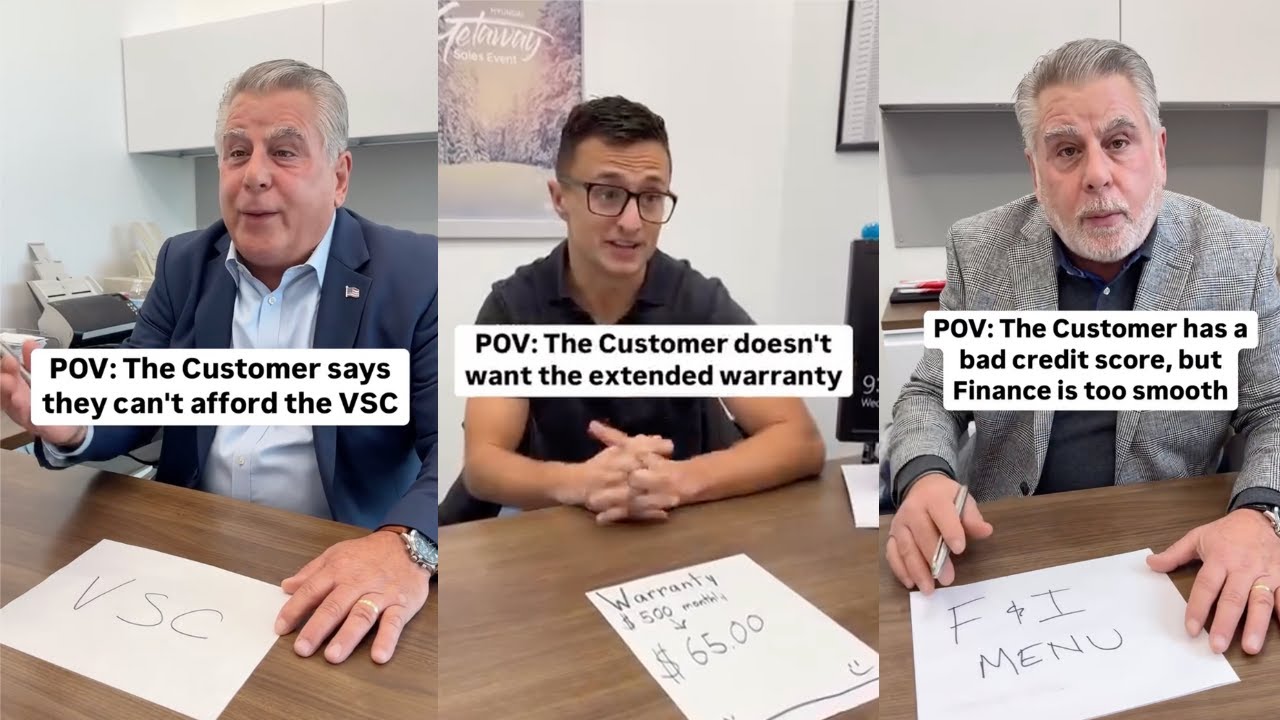
"I'm not spending a penny over $500." Sound familiar? If you're in F&I, you've probably heard a version of this more times than you can count. Objections like these can be the biggest roadblock between a high-performing F&I office and missed revenue opportunities.
Understanding and overcoming objections isn't just about selling more products—it's about delivering value in a way the customer understands. When handled correctly, objections become a gateway to better customer relationships, higher PVR, and full compliance.
That’s where Product Prep comes in. Led by Gerry Gould, one of the most respected voices in automotive finance, Product Prep provides dealership professionals with proven rebuttals and psychology-driven approaches to close more deals without high pressure or gimmicks.
- Understanding the Core of Every Objection: It’s Almost Always About Value
- Why Breaking Down Monthly Payments Into Daily Costs Works
- Handling Emotional vs. Logical Objections Like a Pro
- The Power of Permission-Based Rebuttals and Soft Language
- What Are F&I Objections (and Why They Matter)?
The Most Common Types of F&I Objections
"It’s Too Expensive"
Whether it’s “I’m on a budget” or “I won’t go a penny over $500,” this objection almost always ties back to price. The problem? Customers tend to think in terms of monthly totals, not daily value.
Reframe the monthly cost into a daily investment. For instance, a $65 product adds just $2.16/day to the payment. Compare that to what they spend on coffee or lunch, and suddenly it doesn’t seem unreasonable.
"I Don’t See the Value"
Sometimes the customer simply doesn't understand what they’re getting. They may think their reliable brand (like Honda) doesn't need extra coverage.
Focus on what the factory warranty doesn’t cover—like sensors, electronics, or infotainment systems. Use analogies and lifestyle relevance (e.g., golfing vs. waxing the car) to reframe the value.
"I Need to Think About It"
This classic stall is usually code for either confusion or concern about value.
Ask clarifying questions like: "Do you mind if I ask what there is to think about? Is it the money, or do you still have questions about the coverage?"
"I Was Told Not To Buy This"
The "Dave Ramsey said..." or "My mechanic friend told me..." objections are increasingly common.
Meet these objections head-on with facts. Explain that influencers often speak to general audiences, but F&I is highly individual. Remind the customer that today’s vehicles are loaded with tech that mechanics don’t fix—they replace.
"I’ll Take My Chances"
This is another way of saying: "I haven’t had a problem before."
Focus on risk transfer. Remind them they’re not buying insurance because something happened, but in case it does.
"It’s a Lease / I’m Paying Cash"
Short-term ownership doesn’t mean no risk.
Highlight resale value protection, fixed maintenance costs, and convenience. Show that products like prepaid maintenance help them save and preserve vehicle condition for the next owner.
How to Transform Objections into Opportunities
Step 1: Diagnose the Root Objection
Use open-ended questions to dig deeper. As Gerry teaches, "Do you mind if I ask you a question?" disarms customers and invites dialogue.
Step 2: Use Soft, Permission-Based Language
Phrases like, "Do you mind if I share something with you?" reduce resistance. It makes the conversation collaborative, not confrontational.
Step 3: Personalize the Pitch
Reference customer habits, needs, and plans. Are they driving 18,000 miles a year? Keeping the car for 10 years? Use those facts to paint a compelling need.
Step 4: Break Down the Cost
Divide by 30. Almost every customer reconsiders when they realize the product they need only costs $1.50 to $2.00 a day.
Step 5: Close with Clarity and Confidence
Once the objection is resolved, confidently guide the customer to the decision: "Doesn’t it make sense to enroll in this program today?"
FAQs
1. What if a customer insists they’ll never use the coverage?
Highlight peace of mind. As Gerry puts it, “There’s one thing you had before that money can’t buy—peace of mind.”
2. How do I respond when a customer says they’re on a strict budget?
Break it down. $1.50/day feels manageable compared to $60/month. Daily framing helps them re-evaluate priorities.
3. How can I confidently explain value without sounding pushy?
Use permission-based language and real-life analogies. Ask questions, don’t push pitches.
4. Can these techniques improve customer satisfaction too?
Yes. Customers appreciate transparency and tailored recommendations. That leads to more trust and higher CSI scores.
Conclusion
Every objection in the F&I office is an opportunity. Whether it’s about price, skepticism, or just needing to think, it all boils down to one thing: perceived value.
By mastering objection handling, F&I managers can turn hesitation into confidence and confusion into clarity. From breaking down cost into daily terms to using soft language and personalized insights, these strategies aren’t about pressure—they’re about perspective. Remember, in today’s F&I landscape, it’s not the product—it’s the presentation.
By the way, you’re invited to check out our world-class F&I training program where the average F&I Manager increases their PVR by over 30% in the first month. You’ll have access to 100+ hours of training videos personalized to your weaknesses. Plus, you get exclusive access to see Gerry Gould LIVE twice per month to ensure you continue to grow your skillset and income. Come join a community of the top F&I Managers in the country and the #1 F&I Training in the world. For $149 you can pay that off with one extra deal we’ll personally teach you in the first week of training.