
Common F&I Objections and How To Overcome Them
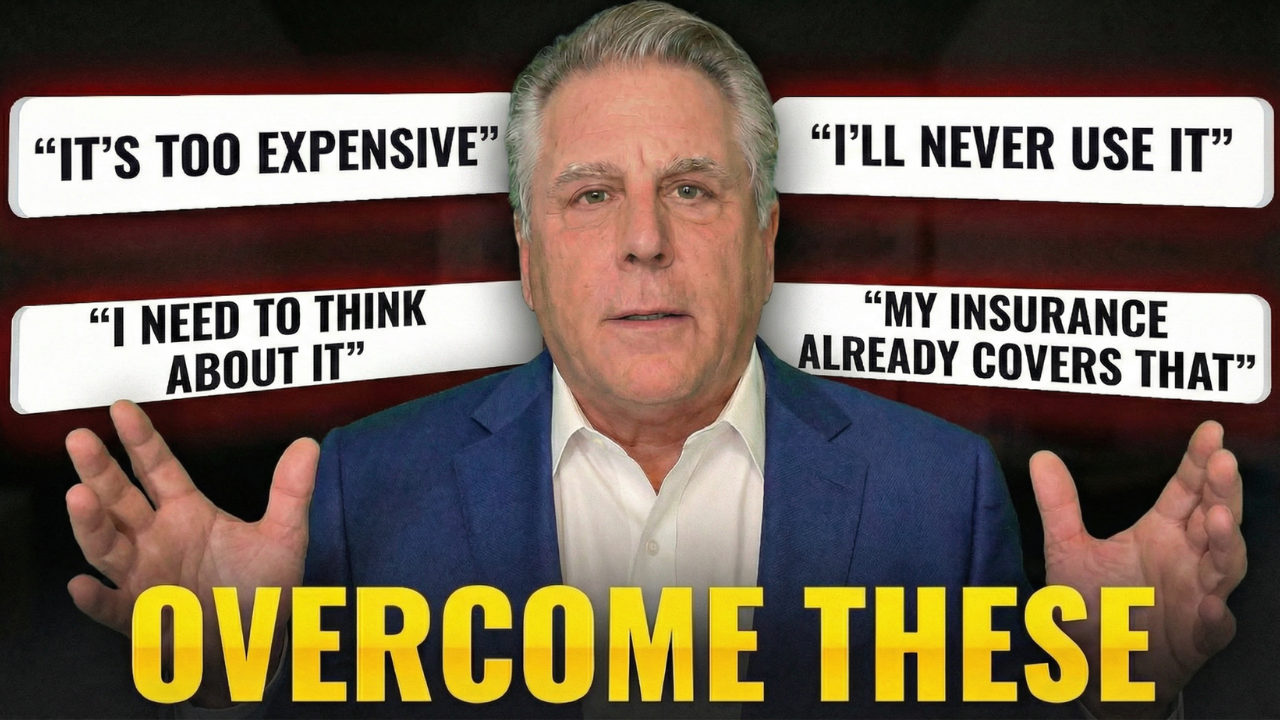
How many times have you delivered a strong menu presentation, built value, handled concerns professionally, only to hear the customer lean back and say, “I’ll take my chances”? It sounds harmless. Casual. Even polite. But for many F&I managers, that single sentence is where gross profit disappears. The truth is this. “I’ll take my chances” is one of the most common F&I objections and one of the most misunderstood. Most managers either joke through it, push harder, or accept it too quickly. All three responses cost you money.
According to Gerry Gould, objections are rarely rejection. They are signals. They are invitations to go deeper. When handled correctly, they create more dialogue, more trust, and more backend profit. This article will break down common F&I objections and how to overcome them using structured frameworks, not memorized scripts. You will learn how to reframe resistance, transfer risk logically, and use process-driven strategies to increase product penetration while staying compliant.
If you want to grow your PVR consistently, mastering objection handling is not optional. It is essential.
Key Takeaways
-
“I’ll take my chances” usually means the customer sees risk but does not want to pay for it.
-
The most powerful F&I closes are built around the transfer-of-risk principle.
-
Body language and process determine whether objections can be overcome.
-
Word tracks alone do not close deals. Understanding the principle behind them does.
-
Elite F&I managers welcome objections because they create opportunity.
-
Structured training like Product Prep Live turns objection handling into predictable profit.
Understanding the Psychology Behind Common F&I Objections
Before you can master common F&I objections and how to overcome them, you must understand what is happening psychologically inside your office.
Customers enter the F&I office in a different emotional state than they were on the showroom floor. On the sales floor, they are imagining ownership. They are excited. They are engaged. In F&I, the focus shifts to contracts, money, and long-term responsibility.
That shift creates tension.
Some customers physically show it. They lean back. They cross their arms. They check their watch. They give short answers. If you have been in finance long enough, you know the posture immediately.
According to Gerry Gould, objection handling starts long before the objection. If you drag a customer into the F&I office instead of easing them in, you create resistance. If you skip the introduction and rush into the menu, you reinforce tension.
By contrast, when you form a connection and involve the customer early, you often see their posture change. Arms unfold. They lean forward. Their hands rest on the desk. They begin listening with intention.
Here is the key insight. If the foundation is weak, the objection will feel stronger. If the foundation is strong, the objection becomes easier to navigate.
Many managers ask how to overcome objections. The better question is whether the process before the objection was followed correctly.
The Most Common F&I Objection: “I’ll Take My Chances”
Among all common F&I objections and how to overcome them, “I’ll take my chances” stands out.
It is subtle. It is not aggressive. It does not say “I do not want it.” It does not say “That is too expensive.” It simply implies independence.
But here is what makes it powerful.
When a customer says they will take their chances, they are acknowledging risk.
Think about the semantics.
If someone truly believed there was no risk, they would not use the word “chance.” The word itself implies uncertainty.
This is where many F&I managers make a mistake. They either argue the risk or abandon the conversation. Instead, you must explore the implication.
A structured response begins with a calm acknowledgment.
“I get it. When you say you will take your chances, I am assuming you do see some level of risk.”
Then you stop talking.
Silence is powerful. The customer will either confirm or clarify.
If they confirm, you ask the next logical question.
“Why would you want to take that risk, especially in today’s economy?”
That question shifts the conversation from emotion to financial logic.
Now you are not selling a product. You are discussing responsibility.
The Transfer-of-Risk Framework
At its core, F&I is not about products. It is about transferring financial risk.
Customers transfer risk every day. They insure their homes. They insure their health. They insure their vehicles. They lock in fixed-rate mortgages. They prepay for service plans. They extend warranties on electronics.
Why?
Because predictable expenses feel safer than unpredictable ones.
When discussing common F&I objections and how to overcome them, the transfer-of-risk principle is your foundation.
You are not preventing events from happening. You are transferring the responsibility of paying for them when they do.
Here is a powerful framing question.
“Who do you want writing the check if something happens? You or the coverage company?”
That question reframes the decision. It moves the conversation from product cost to financial responsibility.
No one enjoys writing a large check unexpectedly. Most customers agree with that. Once they agree, you can logically guide them toward protection.
Structured Closes to Overcome “I’ll Take My Chances”
1. The Assumptive Risk Acknowledgment Close
This is one of the most effective strategies for handling common F&I objections and how to overcome them.
You say:
“I get it. When you say you will take your chances, I am assuming you see some level of risk.”
Then pause.
Do not rush. Do not fill the silence.
If the customer says yes, your follow-up is simple.
“Why take that risk?”
In many cases, the customer begins justifying the product for you.
The power of this close is that it feels conversational. It does not feel scripted. It feels logical.
Managers who implement this strategy in Product Prep Live training sessions often report immediate increases in service contract penetration because they stop arguing and start asking.
2. The Refined Acknowledgment and Reframe
Many F&I managers were trained to say “I understand.”
According to Gerry Gould, that phrase can sometimes create subtle friction. It sounds rehearsed. It sounds like a sales reflex.
Instead, use “I get it.”
For example:
“I get it. These options are not for everyone. But what it really comes down to is who you want paying if something happens.”
Then explain the repair process.
“When you have a repair, do you want to write the check, or send the bill to the administrator?”
That reframe keeps the conversation practical. It avoids pressure.
Dealerships that refine language in this way often see improved customer satisfaction scores because the conversation feels respectful.
3. The Cost of One Event Close
Fear-based selling is outdated. Financial logic is powerful.
Instead of discussing everything that could go wrong, focus on one realistic event.
“Most of my customers are not worried about everything going wrong. They are just hoping nothing expensive goes wrong.”
Then anchor the conversation.
“If one three-thousand-dollar repair happened, would you rather write that check all at once or have it already handled?”
Now add real context.
Labor rates in many markets are between 160 and 200 dollars per hour. Parts often cost two to three times labor. Modern vehicles contain cameras, sensors, and electronic modules. Even a minor collision can trigger thousands in replacement costs.
A heated seat malfunction can cost 1,800 to 2,000 dollars. Rear bumper systems with cameras can exceed 4,000 dollars.
You are not scaring the customer. You are educating them.
This approach consistently improves product acceptance because it feels rational.
4. The Manufacturer Logic Close
Another effective strategy when discussing common F&I objections and how to overcome them is using OEM behavior as validation.
Ask the customer how long they plan to keep the vehicle. Confirm their driving habits.
Then explain why manufacturers offer three-year or 36,000-mile warranties.
They limit coverage because the frequency of repairs increases after that period.
If the customer plans to drive 18,000 miles per year, they will exceed warranty coverage in two years.
“Once the manufacturer stops taking the risk, it becomes yours. Would you prefer to extend that protection?”
This is not emotional. It is logical.
When F&I managers tie protection options to actual ownership patterns discussed during the introduction, closing ratios increase significantly.
5. Essential Versus Non-Essential Spending
This framework simplifies budgeting.
“Every vehicle has essential spending and non-essential spending.”
Essential spending includes the payment, gas, maintenance, and insurance.
Non-essential spending includes unexpected repairs.
Ask:
“Would you rather budget a small predictable amount monthly, or risk an unexpected expense you cannot control?”
That question gives the customer control while highlighting unpredictability.
Why Process Beats Word Tracks Every Time
Many F&I managers search online for common F&I objections and how to overcome them hoping to find the perfect script.
There is no perfect script.
There is a perfect process.
A proper introduction reduces tension. Gathering ownership habits allows tailored closes. Explaining the purpose of the menu before presenting it increases transparency.
In Product Prep Live sessions, managers role-play introductions repeatedly. The goal is to create comfort before presenting products.
One mid-sized dealership in Texas implemented this structured approach. Within three months, their service contract penetration rose from 38 percent to 55 percent. Their PVR increased by over 400 dollars.
The only major change was process discipline.
Objections are harder to overcome when the customer never trusted the conversation.
Key Compliance Essentials for F&I Managers
Handling common F&I objections and how to overcome them must always remain compliant.
Compliance is not optional. It protects the dealership and the customer.
Here are essential compliance principles:
-
Present all products consistently using a menu.
-
Avoid fear-based exaggerations.
-
Do not misrepresent manufacturer warranties.
-
Use documented disclosures.
-
Maintain clear, documented consent.
Product Prep training emphasizes compliant language while maintaining persuasive strength. Managers learn how to transfer risk without overpromising.
Dealerships that combine strong objection handling with strict compliance often reduce chargebacks and increase CSI simultaneously.
How Product Prep Live Drives Sales and Compliance
Many training programs offer prerecorded videos. They deliver information but lack accountability.
Product Prep Live combines live coaching, structured curriculum, and real-time feedback.
Managers practice objection handling weekly. They receive direct coaching from industry experts like Gerry Gould. They refine language in real scenarios.
Unique benefits include:
-
VIP onboarding
-
Certification pathways
-
Advanced progress tracking
-
Live Q and A sessions
-
Role-play accountability
-
Ongoing performance reviews
One dealership group in Florida enrolled three new F&I managers in Product Prep Live. Within six months, their average PVR improved by 650 dollars per copy. Compliance audit scores improved from 82 percent to 96 percent.
The difference was structured coaching, not random scripts.
Comparing Product Prep to Other Training Options
Many automotive training providers focus heavily on motivation.
Motivation is valuable. Structure is essential.
Here is how Product Prep stands apart:
Traditional Training:
-
One-time seminars
-
Generic scripts
-
Limited follow-up
-
Minimal accountability
Product Prep:
-
Ongoing live training
-
Principle-based objection frameworks
-
Real dealership scenario role play
-
Compliance integration
-
Progress tracking dashboards
-
Certification milestones
Managers are not left alone after a seminar. They are coached consistently.
This personalized approach leads to measurable performance improvements.
Practical Advice for F&I Managers
To master common F&I objections and how to overcome them, apply these strategies immediately:
-
Record yourself during role play and evaluate tone.
-
Replace “I understand” with “I get it.”
-
Practice silence after risk acknowledgment.
-
Study ownership habits during introduction.
-
Use one realistic repair example, not ten.
-
Focus on budgeting logic.
-
Track penetration and PVR weekly.
Small refinements create large financial impact.
If your average PVR increases by 300 dollars per deal and you deliver 100 deals per month, that equals 30,000 dollars in additional gross.
Objection handling directly affects profitability.
Turning Objections Into Predictable Profit
Elite F&I managers do not fear objections.
They expect them.
When a customer says “I’ll take my chances,” they do not see rejection. They see an open door.
They calmly acknowledge risk. They reframe responsibility. They guide with logic. They remain compliant.
Over time, this approach becomes natural.
Product penetration increases. Chargebacks decrease. CSI improves. Confidence grows.
That is the power of structured training.
FAQs
1. What is the most common F&I objection?
“I’ll take my chances” and “I don’t need it” are among the most common. Both typically reflect cost sensitivity rather than lack of interest.
2. Does objection handling training increase PVR immediately?
Many dealerships report improvement within the first 30 to 60 days. Consistency in applying frameworks is critical.
3. Is Product Prep only for experienced F&I managers?
No. It supports beginners, experienced managers, sales managers, and dealer principals seeking performance improvement.
4. Can objection handling skills improve CSI scores?
Yes. When customers feel educated rather than pressured, satisfaction increases alongside backend gross.
Conclusion
Mastering common F&I objections and how to overcome them is not about memorizing clever responses. It is about understanding risk psychology, building a strong process, and guiding financial decisions logically. When a customer says, “I’ll take my chances,” they are not closing the door. They are inviting you to clarify responsibility.
If you want predictable PVR growth, stronger compliance, and confident F&I performance, structured training is essential. Product Prep has helped dealerships across the country transform objection handling into consistent profit. The question is not whether objections will happen. The question is whether you are prepared to turn them into opportunity.
By the way, you’re invited to check out our world-class F&I training program where the average F&I Manager increases their PVR by over 30% in the first month. You’ll have access to 100+ hours of training videos personalized to your weaknesses. Plus, you get exclusive access to see Gerry Gould LIVE twice per month to ensure you continue to grow your skillset and income. Come join a community of the top F&I Managers in the country and the #1 F&I Training in the world. For $149 you can pay that off with one extra deal we’ll personally teach you in the first week of training.