
5 Words To Avoid In F&I
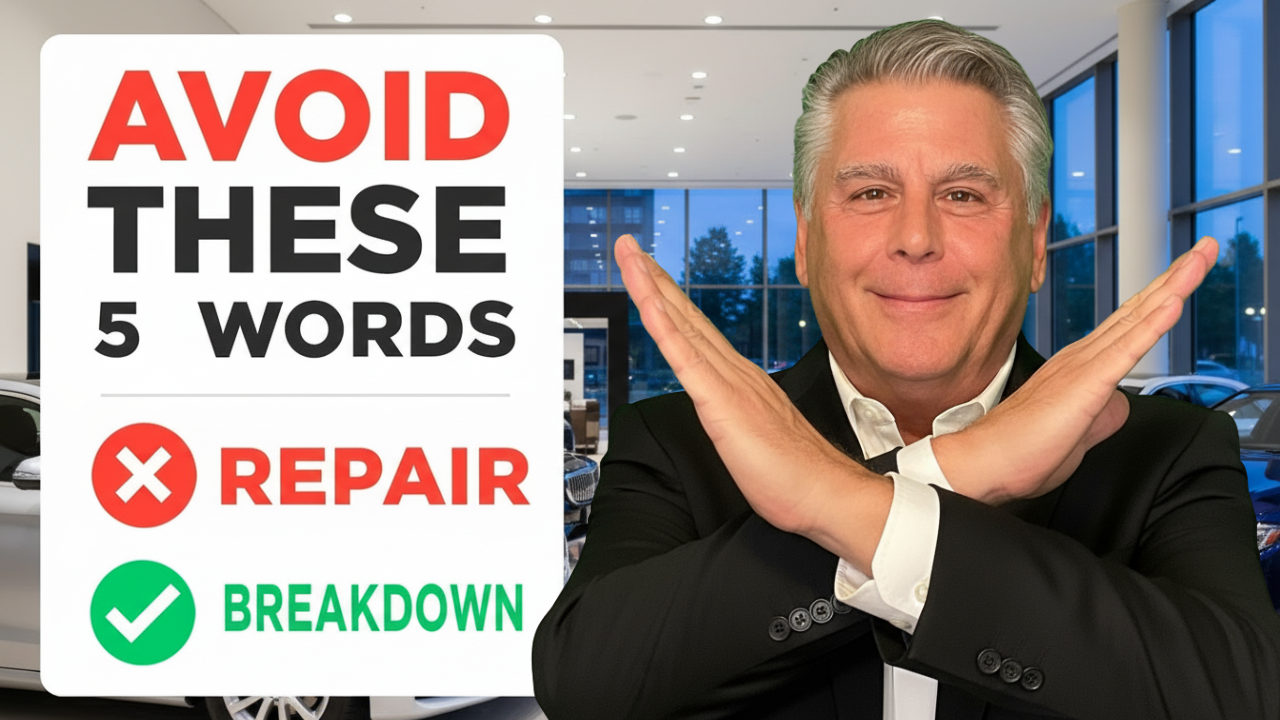
Are the words you use in the F&I office quietly killing your deals? Most F&I managers never stop to consider how much power a single word holds. Yet every conversation, every product presentation, and every objection you encounter is shaped by the language you choose. The right words build confidence and connection. The wrong ones create hesitation, doubt, and sometimes an immediate no. In the dealership environment, where seconds matter and every interaction counts, your vocabulary becomes one of the most important tools you have. This is especially true in the F&I office, where your responsibility is not only to present protection products, but also to help customers feel secure, informed, and confident in their decisions. Most importantly, your language impacts PVR, CSI, product penetrations, and the overall customer experience.
Few people understand this better than Gerry Gould, one of the most respected F&I trainers in the industry and a pillar of the Product Prep training system. Gerry has spent decades studying customer behavior and refining how small shifts in wording can influence how customers feel, think, and respond during the buying process. This article breaks down five words to avoid in the F&I office, why these words sabotage your presentations, and what to say instead. You will also learn how Product Prep’s training helps F&I managers elevate their vocabulary, sharpen their presentation skills, and improve results across the board. Whether you are a seasoned F&I veteran or brand new to the role, mastering communication at this level is one of the fastest ways to increase your influence, drive higher penetration rates, and boost PVR month after month.
Let’s get into the psychology behind the words that work, the words that don’t, and how to use language to create clarity and confidence during every F&I conversation.
Key Takeaways
- Some words create resistance without you realizing it
Words like package, protect, and contract seem harmless but often trigger subconscious objections. - F&I success depends on the clarity and impact of your communication
Replacing vague or negative words with neutral or positive alternatives enhances the customer’s buying experience. - Product Prep training teaches managers to use language intentionally
This includes scripts, tonality control, real-time coaching, and communication strategies that shorten hesitation and increase trust. - Small word swaps can produce major improvements in customer response and product acceptance
Managers who learn these techniques often see immediate increases in penetration and PVR.
Why Language Matters in F&I
Customers rarely object to the product first.
They object to the way the product was explained.
Many F&I managers rely on habitual language. They present products using the same wording they heard early in their career or borrowed from someone else in the dealership. But customers today are more skeptical, more informed, and more sensitive to pressure than ever. They interpret certain words differently and, in many cases, negatively.
For example:
Tell a customer you will show them a contract and their shoulders tighten.
Tell them you will review an agreement and they relax.
Tell a customer a service contract covers repairs and it feels optional.
Tell them it covers breakdowns and it feels necessary.
This is why language matters. It is not about being clever. It is about being clear.
Your job is to guide the customer through one of the most important financial decisions they will make. If your wording confuses them, pressures them, or creates unintended fear, you will lose the sale and damage trust, even if your intentions were good.
This is also why Product Prep training emphasizes communication fundamentals. Gerry Gould often reminds managers that customers do not buy what they do not understand. Your communication needs to simplify, clarify, and remove fear from the process. When your language accomplishes that, customers respond more openly and confidently.
Below are the five words to avoid because of their unintended impact and the alternatives that produce better results.
The 5 Words To Avoid In F&I (And What To Say Instead)
1. Avoid Saying “Package”
Use “Program,” “Plan,” or “Option” Instead**
The word package implies something bundled together. To a customer, a package sounds like an add-on they must accept as a whole. It often creates the sense that you are trying to load the deal or combine multiple things they may not want.
When customers hear the word package, they do not think flexibility.
They think pressure.
Using words like program, plan, or option reframes the experience. These words signal choice and personalization. They make customers feel in control.
Instead of:
“This package includes tire and wheel, key replacement, and dent repair.”
Try:
“We offer several options designed to enhance your ownership experience. Let me walk you through the most popular programs our customers choose.”
Customers respond better when they feel empowered rather than boxed in.
2. Avoid Saying “Can I”
Use “May I” Instead**
It sounds small, but the difference between can I and may I is massive in psychology.
When you ask, “Can I show you something?” the customer hears a yes or no question. You unintentionally invite resistance.
But when you ask, “May I show you something?” the tone becomes polite, professional, and customer centered. Very few customers say no to a respectful request. It gives them permission to say yes without feeling pressured.
Instead of:
“Can I show you how this works?”
Try:
“May I show you how this program helps when a breakdown happens?”
Managers who adopt this simple shift often report fewer interruptions, smoother presentations, and more cooperative customers.
3. Avoid Saying “Protect Your Investment”
Use “Enhance Your Ownership Experience”**
This is one the entire industry has used for years, yet it often works against us.
Customers know a car is not an investment.
It does not appreciate.
It will not produce income.
You will not get a return.
Calling it an investment sets off internal alarms because it feels inaccurate.
The word protect also brings a negative tone. Protect suggests danger or fear. It pulls the customer into a defensive mental position.
Instead of presenting fear, focus on improving convenience and comfort.
Try:
“These programs enhance your ownership experience by reducing the out-of-pocket expenses that come with unexpected breakdowns.”
Or:
“These options help make your ownership smoother and more enjoyable.”
The customer feels supported, not pressured. They understand the benefit without feeling manipulated.
4. Avoid Saying “Repair”
Use “Breakdown” Instead**
Customers interpret the word repair in two ways:
One, the vehicle is already repaired.
Two, the vehicle needs a repair.
Both interpretations feel vague and easy to dismiss.
Breakdown is clearer. It describes a specific event with a specific consequence. Customers instantly understand what you mean.
Instead of:
“This service contract pays for covered repairs.”
Say:
“This service agreement pays for covered breakdowns and helps eliminate surprise expenses.”
Breakdown instantly places the customer into a scenario they can visualize. The more vivid the picture, the stronger the emotional connection and the need for coverage.
5. Avoid Saying “Contract”
Use “Agreement” Instead**
The word contract triggers one of the strongest negative reactions in customers. Contracts are associated with commitment, legal obligations, and risk.
The word agreement feels far more collaborative. It suggests alignment and mutual understanding.
Instead of:
“This is your service contract.”
Say:
“This is your service agreement that explains what the program pays for when a breakdown happens.”
This small shift can significantly reduce tension and help customers feel more comfortable moving forward.
How These Word Swaps Improve F&I Results
Language controls perception.
Perception controls emotion.
Emotion controls decision making.
When you replace confusing or pressure-triggering words with language that creates confidence, the customer becomes more open and far less defensive. The five swaps outlined above may look simple, but each one removes friction from the sales process.
Here is how these small adjustments influence real results inside a dealership.
1. Customers feel in control
Words like option, plan, and program reinforce choice. When customers feel they are directing the purchase, not being directed into it, they buy more willingly.
2. Presentations sound clearer and more professional
Avoiding vague terms like repair and protect makes your structure more precise. Customers do not buy what they do not understand. Clear language builds trust.
3. Emotional resistance decreases
Contract, protect, and package trigger subconscious concerns. Avoiding these words eliminates tension before it even starts.
4. Objections become easier to overcome
Replacing negative or confusing language allows customers to focus on the value of the product, not the wording surrounding it.
5. F&I managers become more confident presenters
When your language is consistent and intentional, your delivery becomes smoother. Confidence is contagious. Customers follow leaders who speak with purpose.
Dealerships that have adopted Product Prep’s vocabulary techniques consistently report:
• Higher product penetrations
• Increased acceptance of VSC, GAP, and ancillary products
• Reduced objections related to cost or commitment
• Stronger CSI scores
• Higher PVR within the first 30 to 60 days
One dealership group shared that simply shifting from the word repair to breakdown created a 12 percent increase in VSC acceptance across three stores. Another reported that eliminating the phrase protect your investment reduced objections during payment discussions and helped their F&I manager close an additional $300 per copy in the first month.
These achievements did not come from new products or new lenders. They came from better language, better communication, and better customer experiences.
FAQs
1. Why do small word changes matter so much in F&I?
Customers respond emotionally before they respond logically. The wrong word triggers negative emotions like fear, confusion, or pressure. The right word creates comfort, clarity, and confidence. Small changes produce big results because they directly affect customer perception.
2. How quickly can I see results from changing my vocabulary?
Many F&I managers report improvements the same day they apply the new phrasing. Using words like option instead of package or breakdown instead of repair often produces immediate shifts in customer reactions.
3. Does Product Prep help new F&I managers ramp up faster?
Yes. Product Prep provides scripts, live practice, coaching, and support that help new managers build confidence quickly. Many dealerships say that what used to take months of shadowing can now be learned in weeks.
4. How does Product Prep support experienced managers?
Experienced managers benefit from refining their language, sharpening presentation skills, and updating outdated habits. The continuous coaching also helps them stay compliant, adjust to new industry expectations, and maintain high performance.
5. Can these techniques help with compliance?
Absolutely. Clear and accurate language is essential for compliance. Product Prep teaches F&I managers how to explain products in customer friendly terms while staying aligned with legal requirements, lender guidelines, and dealership policies.
Conclusion
The most successful F&I managers are not just knowledgeable. They are exceptional communicators. They know that customers do not buy what they do not understand, and they use language that creates clarity instead of confusion. By avoiding five simple words and replacing them with stronger, clearer alternatives, you can immediately improve your influence, strengthen customer trust, and increase product acceptance. These shifts will help you enhance your presentation, reduce objections, and elevate the customer experience. Product Prep helps F&I managers master this type of high impact communication. Through training with Gerry Gould, live practice sessions, and ongoing support, managers learn how to speak with precision, confidence, and professionalism. The result is higher PVR, stronger compliance, and a better customer journey from start to finish.
By the way, you’re invited to check out our world-class F&I training program where the average F&I Manager increases their PVR by over 30% in the first month. You’ll have access to 100+ hours of training videos personalized to your weaknesses. Plus, you get exclusive access to see Gerry Gould LIVE twice per month to ensure you continue to grow your skillset and income. Come join a community of the top F&I Managers in the country and the #1 F&I Training in the world. For $149 you can pay that off with one extra deal we’ll personally teach you in the first week of training.