
12 Minute Training To Overcome Any Car Sales Objection
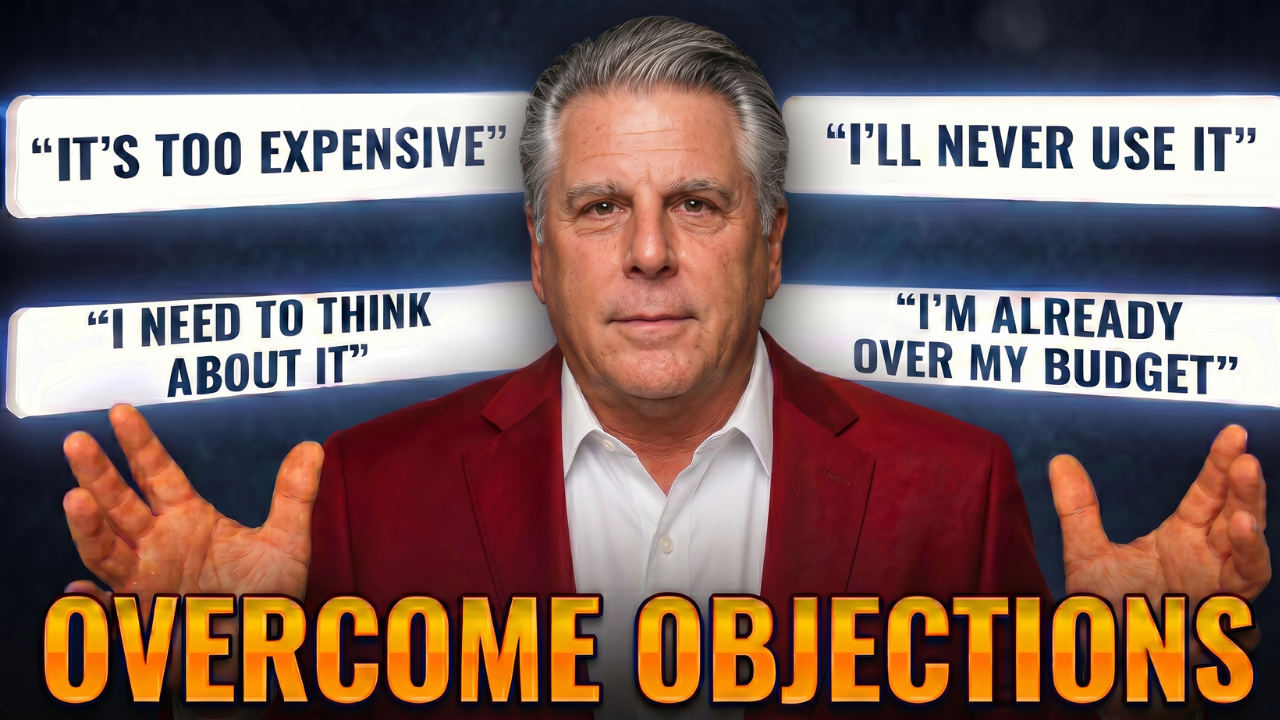
Why do some salespeople seem to handle objections effortlessly while others lose deals the moment a customer says, "I need to think about it"?
The answer usually has very little to do with memorizing scripts and everything to do with understanding the customer. Most salespeople view objections as roadblocks. The best salespeople view them as opportunities to learn more about what is actually preventing the customer from moving forward.
In a recent Product Prep training session, automotive trainer Gerry Gould shared one of the most important lessons every salesperson should learn. Customers rarely object just to object. Most of the time, they are expressing a concern, asking a question, or looking for reassurance before making a major purchase decision.
That mindset changes everything.
Instead of fighting objections, great salespeople focus on managing the conversation. They ask better questions. They uncover the customer's motivations. They guide the customer through a logical buying process. And when concerns arise, they address them naturally instead of becoming defensive or confrontational.
The reality is that today's customers are more informed than ever before. Most buyers complete significant research online before ever stepping foot in a dealership. They know pricing. They know competitors. They know vehicle features. By the time they arrive at the showroom, they are often looking for confirmation that they are making the right decision.
This is why objection handling starts long before the customer says no.
It starts during the meet and greet.
It continues through the needs assessment.
It develops during the walkaround and test drive.
And it becomes much easier when salespeople understand how to manage dialogue throughout the entire road to the sale.
In this article, we'll break down Gerry Gould's practical framework for overcoming virtually any car sales objection by asking better questions, building stronger customer relationships, and staying in control of the conversation from start to finish.
Key Takeaways
- Most objections can be prevented by asking better questions early in the sales process.
- The meet and greet sets the foundation for every future customer interaction.
- A strong needs assessment helps uncover concerns before they become objections.
- Successful objection handling is about understanding customer concerns, not winning arguments.
Why Car Sales Objections Are Really Customer Concerns
One of the biggest mistakes salespeople make is treating every objection like a battle.
A customer says they want to think about it.
The salesperson immediately goes into defense mode.
A customer says the payment is too high.
The salesperson starts arguing about affordability.
A customer says they need to talk to their spouse.
The salesperson assumes they're being brushed off.
In reality, these responses often represent concerns rather than objections.
The customer may genuinely need additional information.
They may be uncertain about a particular feature.
They may have unanswered questions about financing, value, or ownership costs.
When salespeople approach these situations with curiosity instead of resistance, everything changes.
The goal isn't to defeat the customer's objection.
The goal is to understand it.
Consider how many objections disappear naturally when the salesperson uncovers the true concern.
A customer who says the payment is too high may actually be concerned about their monthly budget.
A customer who wants to think about it may actually be comparing another vehicle.
A customer who believes their trade is worth more may simply want reassurance that they're receiving a fair value.
These situations require conversation, not confrontation.
The most successful salespeople understand that every objection is simply another opportunity to ask a question.
When customers feel understood, they become more comfortable sharing what is truly on their mind.
And when you know what's really bothering them, helping them move forward becomes significantly easier.
Start Strong With the Meet and Greet
How to Handle "I'm Just Looking"
Few phrases frustrate inexperienced salespeople more than hearing a customer say, "I'm just looking."
Many salespeople immediately assume the customer is not serious.
Others back away and end the conversation before it ever begins.
Gerry teaches a completely different approach.
Instead of viewing "I'm just looking" as a rejection, view it as an invitation to start a conversation.
A simple response could be:
"That's great. I'm glad you stopped by. Let me show you around. What vehicles are you most interested in today?"
Notice what happens.
The salesperson doesn't argue.
They don't pressure.
They simply guide the conversation forward.
This approach helps the customer feel comfortable while allowing the salesperson to gather valuable information.
Most customers who say they're just looking actually have something specific in mind.
Your job is to uncover what that is.
Questions That Help Salespeople Control the Dialogue
The easiest way to manage a conversation is through questions.
Questions create engagement.
Questions uncover motivations.
Questions reveal concerns.
Instead of asking generic questions, Gerry recommends asking questions that encourage customers to share more information.
Examples include:
- What research have you done so far?
- What attracted you to this particular vehicle?
- What inspired you to stop by our dealership?
- What vehicles are you comparing?
- What features are most important to you?
These questions create meaningful dialogue.
They also prevent the customer from controlling the entire conversation.
Remember, if you don't manage the dialogue, the customer will.
And once the conversation goes off track, it's much harder to guide the customer back toward a purchase decision.
Use the Needs Assessment to Eliminate Future Objections
Discover the Customer's Value Drivers
The needs assessment is where great salespeople separate themselves from average salespeople.
Most objections occur because the salesperson never fully understood what mattered most to the customer.
When that happens, vehicle presentations become generic.
Customers don't feel understood.
And objections begin to surface.
A proper needs assessment helps eliminate many of these problems before they occur.
During this stage, salespeople should identify the customer's primary value drivers.
Questions might include:
- What is most important in your next vehicle?
- Are safety features important to you?
- How much emphasis do you place on performance?
- What role does reliability play in your decision?
- Are comfort and convenience major factors?
The answers to these questions provide the blueprint for the rest of the sales process.
Everything that follows should connect back to these priorities.
Keep Probing When Customers Hold Back
Not every customer immediately opens up.
Some provide short answers.
Others seem hesitant to share information.
This is where many salespeople give up too quickly.
Great salespeople keep probing.
Not aggressively.
Not awkwardly.
But consistently.
If a customer says they're interested in a truck, ask why.
If they're interested in a sports car, ask why.
If they're interested in a minivan, ask why.
Every answer reveals another layer of information.
And every piece of information helps you build stronger value later in the process.
Beyond uncovering needs, this process also helps build rapport.
Customers feel heard.
They feel understood.
And they become more comfortable working with you.
That connection becomes invaluable when concerns eventually arise.
The Walkaround Should Connect Back to the Customer's Needs
Use the SPACED Walkaround Framework
Once you've identified the customer's priorities, it's time to demonstrate how the vehicle satisfies those needs.
Gerry recommends using the SPACE walkaround framework:
- Safety
- Performance
- Accessories and Appearance
- Convenience and Comfort
- Economy
- Dependability
This structure ensures salespeople present vehicles in a consistent and organized manner.
More importantly, it ensures customers receive a complete presentation rather than a random collection of features.
Many salespeople make the mistake of simply listing features.
Great salespeople explain benefits.
A feature tells.
A benefit sells.
Repeat the Customer's Own Priorities Back to Them
One of the most powerful techniques in automotive sales is repeating the customer's priorities during the walkaround.
For example, if the customer emphasized safety during the needs assessment, spend additional time demonstrating safety features.
If they mentioned dependability, focus on reliability ratings and ownership experience.
If they care about appearance, highlight styling and design elements.
This approach creates relevance.
Instead of hearing generic information, the customer hears exactly what they told you matters most.
As a result, they become more emotionally connected to the vehicle.
And when customers become emotionally connected, objections often decrease.
The Test Drive Is a Critical Closing Step
Get the Customer Behind the Wheel
Many salespeople underestimate the importance of the test drive.
The truth is that customers often sell themselves during the test drive.
Once they experience the vehicle firsthand, they begin imagining ownership.
They picture themselves driving to work.
Taking family trips.
Running errands.
Enjoying features they may not have considered previously.
The vehicle becomes real.
That's why Gerry recommends getting customers behind the wheel as quickly as possible after a proper walkaround.
During the drive, avoid overwhelming them with constant conversation.
Allow them to experience the vehicle naturally.
Ask simple questions such as:
"How does it feel so far?"
"What do you think about the ride quality?"
"What stands out to you most?"
These questions keep the customer engaged while allowing the vehicle to do much of the selling.
Use the Sold Line to Test Commitment
After returning from the test drive, many salespeople immediately start discussing price.
This can be a mistake.
Instead, Gerry recommends testing commitment first.
One simple technique is discussing the sold line.
If the customer enjoyed the vehicle, suggest parking it in the sold area because it's a popular model.
This naturally transitions into one of the most important questions in the sales process:
"Do you want the vehicle?"
At this point, customers typically reveal where they stand.
They may say yes.
They may express a concern.
Or they may raise an objection.
Either way, you've gained valuable information.
And because you've built rapport, completed a needs assessment, delivered a personalized walkaround, and conducted a successful test drive, you're now in a much stronger position to address whatever concern comes next.
How to Present Numbers Without Creating Price Objections
Stop Making Price the Main Issue
One of the biggest mistakes salespeople make is introducing price as the primary focus of the conversation.
Many salespeople ask:
"If we can agree on price, are you ready to do business today?"
While that question may seem harmless, it immediately directs the customer's attention toward one thing: price.
The problem is that most vehicle purchases involve much more than price alone.
Customers care about value.
They care about features.
They care about reliability.
They care about safety.
They care about monthly budget.
When salespeople focus exclusively on price, they unintentionally create objections that may not have existed before.
Gerry recommends a different approach.
Instead of emphasizing price, focus on fit.
Ask questions such as:
"If we were fortunate enough to find a vehicle that fits everything you're looking for, are you in a position to move forward?"
This subtle shift keeps attention on the vehicle and the customer's needs rather than immediately turning the conversation into a negotiation.
Present the Figures and Listen
When it's time to present numbers, many salespeople feel compelled to explain every detail before the customer has even responded.
This often creates confusion.
It can also introduce concerns the customer wasn't even thinking about.
A stronger approach is to present the figures confidently and allow the customer to react.
Once they respond, listen carefully.
Their first reaction often reveals the true concern.
Maybe it's the payment.
Maybe it's the trade.
Maybe it's the down payment.
Maybe it's something completely different.
The key is to let the customer tell you where the issue is rather than guessing.
How to Handle "You're Not Giving Me Enough for My Trade"
Trade objections are among the most common concerns customers raise during negotiations.
The mistake many salespeople make is immediately defending the appraisal.
Instead, Gerry recommends uncovering the real concern behind the statement.
When a customer says:
"You're not giving me enough for my trade."
The response shouldn't be an argument.
It should be a question.
Ask something like:
"Are you concerned because you feel the vehicle is worth more, or are you trying to lower the payment?"
That simple question helps narrow the focus.
Now the conversation becomes productive rather than emotional.
Focus on the Entire Deal
Many customers become fixated on trade value because they are viewing the transaction in isolation.
Great salespeople help customers look at the complete picture.
If another dealership offered more for the trade, ask questions about the entire deal structure.
How much cash difference was involved?
What was the payment difference?
What vehicle were they comparing?
Often, customers discover that the overall deal is much closer than they originally believed.
The objective isn't to prove the customer wrong.
The objective is to provide clarity.
Once customers see the entire financial picture, many trade objections become easier to resolve.
How to Handle "The Payment Is Too High"
Find the Closest Acceptable Payment
When customers say the payment is too high, many salespeople immediately leave the desk to ask a manager for help.
Gerry refers to this as the opposite of staying in your seat.
Instead of running away from the conversation, stay engaged.
Ask questions.
One of the most effective questions is:
"What is the closest payment you would be willing to go on this piece of paper?"
This question accomplishes several things.
First, it gets the customer involved in solving the problem.
Second, it provides valuable information.
Third, it moves the conversation toward a realistic solution rather than a vague disagreement.
Keep the Dialogue Moving
Once the customer provides a number, additional options can be explored.
Would a slightly larger down payment help?
Would a different term improve affordability?
Would another vehicle option make sense?
The point is to continue having a conversation.
Too many deals are lost because salespeople stop communicating the moment a concern appears.
Customers often provide the solution if you simply ask the right questions.
How to Handle "I Want to Think About It"
Few objections frustrate salespeople more than hearing:
"I want to think about it."
The reason this objection is difficult is because it often feels vague.
Many salespeople respond by asking:
"What do you need to think about?"
Unfortunately, this question rarely produces useful information.
Customers typically respond with equally vague answers.
Instead, Gerry recommends assuming there is another vehicle under consideration.
Ask:
"What other vehicles are you looking at?"
This question immediately shifts the conversation toward specifics.
Now you have something concrete to discuss.
Use Competitive Knowledge to Your Advantage
Today's customers shop multiple vehicles.
That's normal.
Strong salespeople prepare for this reality.
When customers reveal another vehicle they're considering, use your product knowledge.
Discuss the differences.
Compare features.
Review advantages.
Most importantly, ask the customer how your vehicle compares with the alternative.
Questions such as:
"After driving this vehicle, how does it compare to the other one?"
help customers evaluate their decision more clearly.
The goal isn't to criticize competitors.
The goal is to help customers recognize the value of the vehicle they just experienced.
Uncover the True Concern
Sometimes customers are not considering another vehicle at all.
That's when you can ask one of Gerry's favorite questions:
"What's preventing you from moving forward?"
This question often reveals the true objection.
The customer may mention their spouse.
Their budget.
Timing concerns.
Or uncertainty about making a decision.
Whatever the answer, you now have something real to address.
How to Handle "I Need to Talk to My Spouse"
This objection appears in dealerships every day.
And while it can be legitimate, it can also become a convenient way for customers to postpone making a decision.
The key is handling it respectfully.
Make the Conversation Personal
Instead of immediately challenging the objection, acknowledge it.
Most people would want to discuss a major purchase with their spouse.
Then make the conversation more personal.
Ask for their spouse's name.
If their spouse's name is Betty, use Betty's name.
If their spouse's name is Chuck, use Chuck's name.
This transforms the conversation from a generic objection into a real discussion.
Keep Momentum Moving Forward
You might ask:
"What do you think Betty would say?"
Or:
"What concerns do you think Chuck might have?"
These questions encourage the customer to think through the situation.
In many cases, they already know what their spouse's response will be.
Some salespeople even suggest making a quick phone call.
While this won't always happen, it demonstrates confidence and helps prevent unnecessary delays.
The objective isn't to pressure the customer.
It's to help them make an informed decision while maintaining momentum.
How to Handle "I Didn't Expect to Spend This Much"
This objection is common because customers often discover features, benefits, and vehicle options they didn't originally plan for.
The challenge is helping them view the decision from a different perspective.
Reframe the Cost Difference
One of Gerry's most effective techniques involves breaking monthly payment differences into daily costs.
For example:
A customer may say:
"This is $100 more per month than I wanted to spend."
Rather than debating the number, break it down.
One hundred dollars per month equals approximately three dollars per day.
Now ask:
"Is three dollars a day going to significantly change your lifestyle?"
Most customers will say no.
That creates an opportunity for a more productive discussion.
Compare Cost to Satisfaction
The next step is helping customers think long term.
Ask questions such as:
"Would you rather save three dollars a day and drive a vehicle you don't really want?"
Or:
"Would you rather spend a little more and enjoy the vehicle you're excited about?"
Many customers recognize that vehicle satisfaction lasts much longer than the discomfort of a slightly higher payment.
Again, the goal isn't pressure.
The goal is perspective.
Why Word Tracks Are Roadmaps, Not Scripts
Many salespeople spend years searching for the perfect script.
They believe there is a magic phrase that instantly overcomes objections.
The truth is much different.
Word tracks are valuable.
Scripts can be effective.
But neither works without understanding the principle behind them.
A word track is simply a roadmap.
It provides structure.
It helps guide conversations.
It prevents salespeople from getting lost.
But great salespeople understand why the question works.
For example, asking a customer what other vehicles they're considering isn't powerful because of the wording itself.
It's powerful because it uncovers information.
Once salespeople understand the purpose behind the question, they can adapt naturally to different situations.
This creates authenticity.
Customers respond much better to genuine conversations than rehearsed speeches.
The most successful salespeople don't sound scripted.
They sound confident, curious, and helpful.
That's the real lesson behind every word track Gerry teaches.
FAQs
1) What is the best way to overcome car sales objections?
The best way is to understand the customer's concern before trying to answer it. Ask questions, gather information, and respond logically based on what the customer is actually saying.
2) How should a salesperson respond when a customer says "I'm just looking"?
Acknowledge the customer, make them feel comfortable, and begin asking questions about their interests, research, and vehicle preferences. The objective is to start a conversation rather than end one.
3) What should salespeople do when customers say the payment is too high?
Ask what payment range would work for them and continue exploring solutions. Keep the dialogue moving instead of immediately leaving the desk.
4) Why is the needs assessment important?
The needs assessment helps uncover what matters most to the customer. When salespeople understand value drivers early, they can present vehicles more effectively and reduce future objections.
Conclusion
The biggest lesson from Gerry Gould's 12-minute objection handling training is simple: objections are rarely the real problem.
Most objections are simply concerns that have not yet been fully understood.
The salesperson who asks better questions will almost always outperform the salesperson who tries to provide faster answers.
Strong objection handling begins during the meet and greet. It continues through the needs assessment. It becomes more effective during the walkaround and test drive. And it reaches its full potential when salespeople learn how to manage dialogue rather than react emotionally to resistance.
Remember, customers buy when they feel understood.
That's why the best salespeople focus less on talking and more on listening.
They ask questions to understand.
They uncover concerns.
They provide logical solutions.
And they help customers make confident buying decisions.
If you're looking to improve your ability to handle objections, strengthen your customer conversations, and become more effective throughout the road to the sale, Product Prep's sales training and certification programs provide practical tools that can be implemented immediately in the dealership.
Because at the end of the day, overcoming objections isn't about having the perfect script.
It's about understanding people.
By the way, you’re invited to check out our world-class F&I training program where the average F&I Manager increases their PVR by over 30% in the first month. You’ll have access to 100+ hours of training videos personalized to your weaknesses. Plus, you get exclusive access to see Gerry Gould LIVE twice per month to ensure you continue to grow your skillset and income. Come join a community of the top F&I Managers in the country and the #1 F&I Training in the world. For $149 you can pay that off with one extra deal we’ll personally teach you in the first week of training.